Have you ever paused mid-tasting, perhaps slightly puzzled, then suddenly smiled because you have finally smelled it? Strawberry in a Pinot Noir. Cracked black pepper in a Syrah. That lightbulb moment is often followed by the same question: how can grapes possibly smell so distinctly like things that are not grapes at all?
In this piece, Deniz Bayram DipWSET, wine educator at WSET School London, explains why these familiar aromas are not imaginary, but grounded in chemistry. By understanding how aromas work, the sensory world of wine becomes less mysterious and far more relatable.

Identifying and assessing wine aromas during a structured tasting using the WSET Systematic Approach to Tasting (SAT).
Despite seeing countless students over the course of a busy working week, one of the great joys of being a wine educator is witnessing that moment when a student pauses during a tasting, perhaps looking slightly puzzled, then suddenly smiling because they have finally smelled it. Whether it is strawberry in a Pinot Noir or the unmistakable cracked black pepper in a Syrah, these moments are often followed by the same question: how can grapes possibly smell so distinctly like things that are not grapes?
It can feel almost magical at first. The reality is far more interesting. Once we understand how aromas work, the sensory world of wine becomes less mysterious and far more relatable.
What is an aroma or flavour?
In wine education, we draw clear boundaries between taste and aroma or flavour. Taste refers to sensations such as sweet, sour, salty, bitter and umami. Aroma and flavour, by contrast, are detected by the nose, either directly when we smell a glass (orthonasal perception) or indirectly through the back of the throat when we take a sip (retronasal perception). This explains why wine often feels far more expressive once it is in the mouth.
Most of us have experienced this distinction when we have a cold. With a blocked nose, eating becomes far less pleasurable. A piece of cheese will still taste salty, but its characteristic flavours seem to disappear. Taste remains. Aroma and flavour are muted.
What gives wines and foods their distinctive aromas and flavours are chemical compounds. These are tiny molecules that evaporate easily and reach our sensory receptors. Understanding this principle is the key to understanding wine aroma.
Why certain wines have distinct aromas unrelated to grapes
This is the central enigma. Grapes contain countless aroma compounds, and these compounds are not always unique to grapes. Many exist elsewhere in the natural world, in fruit, flowers, vegetables, spices and even non-food materials. When we identify a familiar aroma in wine, we are recognising one of these compounds, not the literal presence of peach or leather in the wine. In some cases, these compounds can remain hidden in the grape as aroma precursors, only revealing themselves after fermentation.
This explains why grapes can smell like fruits, flowers and sometimes things that seem entirely unrelated. The same aroma molecules exist in more than one place in the natural world. Grape skins, pulp and seeds contain hundreds of potential aroma compounds. If a wine smells of peach or green bell pepper, it is because the same compound exists in both. We are not imagining these aromas. We are recognising something real.
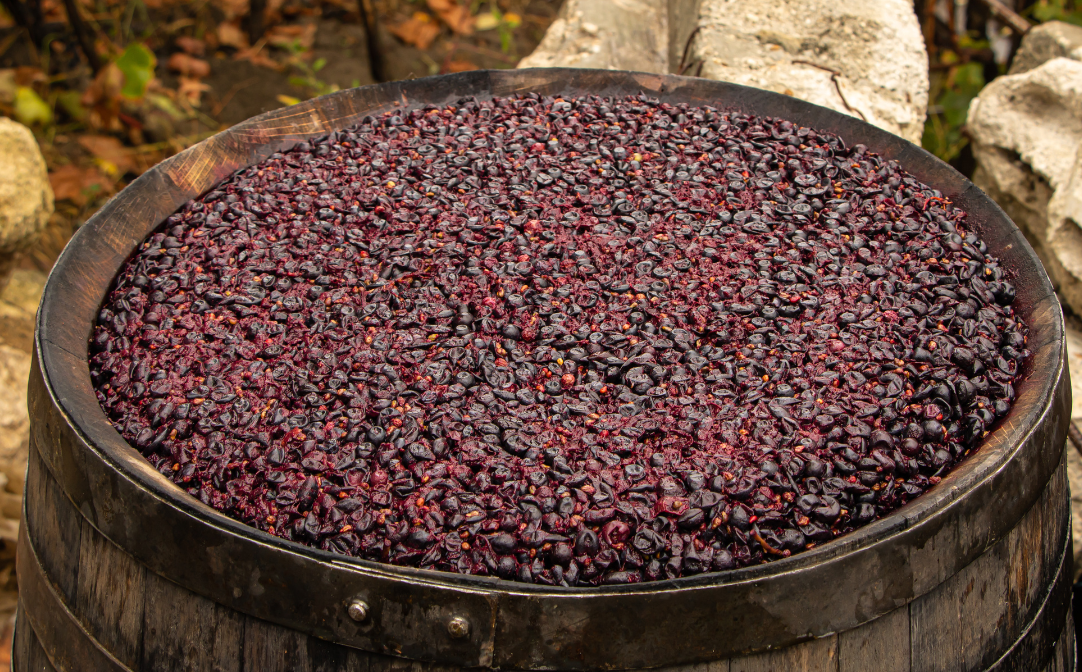
Crushed grapes during fermentation, where colour, tannin and many aroma compounds are extracted from the skins.
In WSET classrooms, we emphasise that aroma is not a poetic metaphor. It refers to identifiable chemical compounds responsible for specific scents. Some aromas come directly from the grape itself. These are known as primary aromas, and they are the reason why different grape varieties smell distinct from one another. Other aromas can be introduced through winemaking choices, while others develop as a wine matures. This framework helps us understand where aromas come from, but varietal character always begins with what is already present in the grape.
WSET students learn to taste in a logical, systematic, and above all professional manner during their WSET course. Our Systematic Approach to Tasting (SAT) is designed to build individuals' skills progressively through the different qualification levels.
Recognising aromas by grape variety
When aromas stop feeling like an endless guessing game, patterns start to emerge. Certain grape varieties return to the same aroma families repeatedly, across regions and styles. This is why professional wine tasters often start with grape variety.
Learning these associations is not about memorising tasting notes to sound clever, but about familiarity. When we recognise an aroma we have encountered before, wine feels far more approachable. Here are a few classic examples that regularly create those lightbulb moments.
Sauvignon Blanc & the Cabernet family
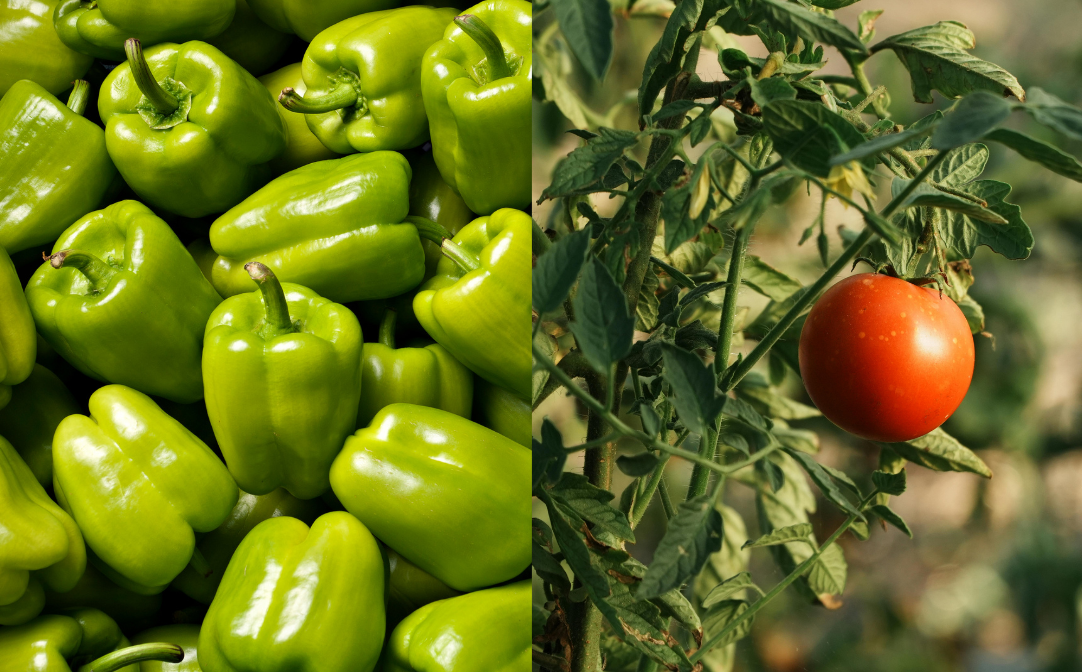
Green bell pepper and tomato leaf
Sauvignon Blanc, Cabernet Franc and their offspring, Cabernet Sauvignon, are well known for their green, leafy aromas. Green bell pepper, tomato leaf and freshly cut grass are typical descriptors. These notes come from a family of compounds known as methoxypyrazines.
Methoxypyrazines are naturally present in these grapes and are highly potent. Tiny concentrations are enough for our noses to detect them clearly. This is why these aromas can feel so striking and why they are so useful as learning references.
Ripeness plays a key role in how pronounced these aromas are. Methoxypyrazine levels are higher in less ripe grapes and tend to decrease as ripening progresses. In cool climates, shaded vineyards or earlier harvests, green characteristics often dominate. With greater warmth and sunlight, the same grape varieties show softer herbaceous notes alongside riper fruit aromas. The result can be very different styles, while remaining recognisably varietal.
Gewürztraminer
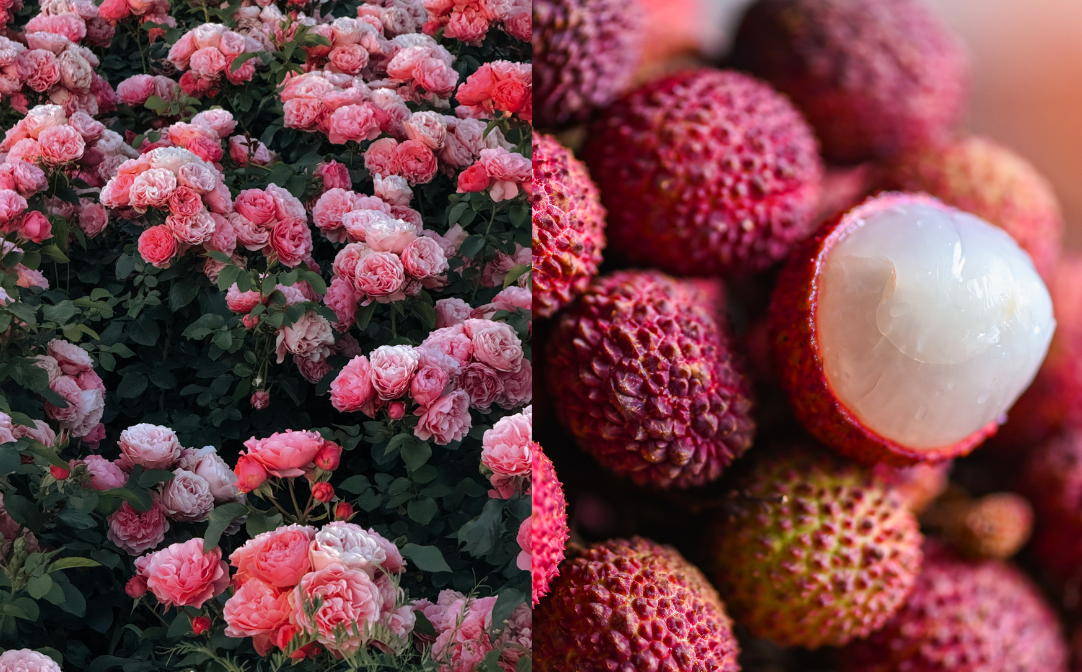
Rose and lychee
Gewürztraminer rarely needs much encouragement to announce itself. It is one of the most aromatic grape varieties, often filling the glass with rose petal, Turkish delight and lychee.
These aromas are linked to compounds such as geraniol and cis-rose oxide, which are also found in flowers and aromatic fruits. In this case, genetics do much of the work. Gewürztraminer naturally contains higher levels of these compounds, which explains why its character is often immediately recognisable, even to less experienced tasters.
This combination of intense aroma and rich fruit expression is what makes Gewürztraminer so distinctive and, for many people, unforgettable.
Riesling
Petrol
Riesling provides one of the most talked-about aroma associations in wine. Petrol, or as one pilot student once described it, “like standing on the tarmac before a flight”, is often divisive, but it offers a fascinating insight into grape chemistry.
The aroma comes from a compound called 1,1,6-trimethyl-1,2-dihydronaphthalene, more commonly known as TDN. Riesling grapes themselves never smell like petrol. Instead, TDN forms gradually from aroma precursors linked to carotenoids, the same compounds responsible for the yellow and orange colours in vegetables such as carrots. In the vineyard, carotenoids help protect grape skins from intense sunlight. During fermentation and ageing, they can break down and lead to the development of petrol aromas.
Several factors influence how noticeable this character becomes. High sunlight exposure and riper grapes are strongly associated with higher TDN levels. Higher acidity can also increase its perception, something Riesling naturally has in abundance. Yeast strains appear to have very little influence, which is why this aroma can be difficult to manage once present.
This helps explain why Rieslings from warmer, sunnier regions such as Australia often show more pronounced petrol notes than those from cooler climates like Germany. As climate change brings warmer conditions to many wine regions, this aroma has become more common in certain styles.
Petrol in Riesling also reminds us that aroma categories are not always tidy. While it is linked to what is present in the grape, it often intensifies with age. It sits somewhere between a primary and a mature, tertiary aroma. Wine does not always fit perfectly into our frameworks, and that unpredictability is part of its appeal.
Once we realise that aromas are grounded in chemistry and shared across the natural world, they stop feeling elusive or exclusive and instead give us confidence. Associating certain aromas with specific grape varieties is not about finding the “right answer”. It is about building familiarity, trusting our senses, and enjoying the moment when something finally clicks.

About the author
Deniz Bayram DipWSET was born and raised in Istanbul, Turkey, and got a start in the wine industry while training to become a chef in the United States. He completed his WSET Diploma in 2022 and joined the WSET School London faculty in 2023, where he teaches the Level 1–3 Awards in Wines.