


This article is inspired by a recent WSET Bite-Sized webinar on sparkling wine, led by wine writer and educator Victoria Daskal. In the session, Victoria explored the key styles, production methods and regional expressions of sparkling wine, explaining how different winemaking choices influence flavour, quality and price.
Watch the full webinar on the WSET Global Events Hub.
What makes sparkling wine so diverse?
Sparkling wine is one of the most varied categories in the wine world. Styles range from bone dry to sweet, from fresh and fruit-forward to deeply complex and savoury. Sparkling wines can be white, rosé, red or even orange, and prices span from everyday affordability to some of the most expensive wines ever produced.
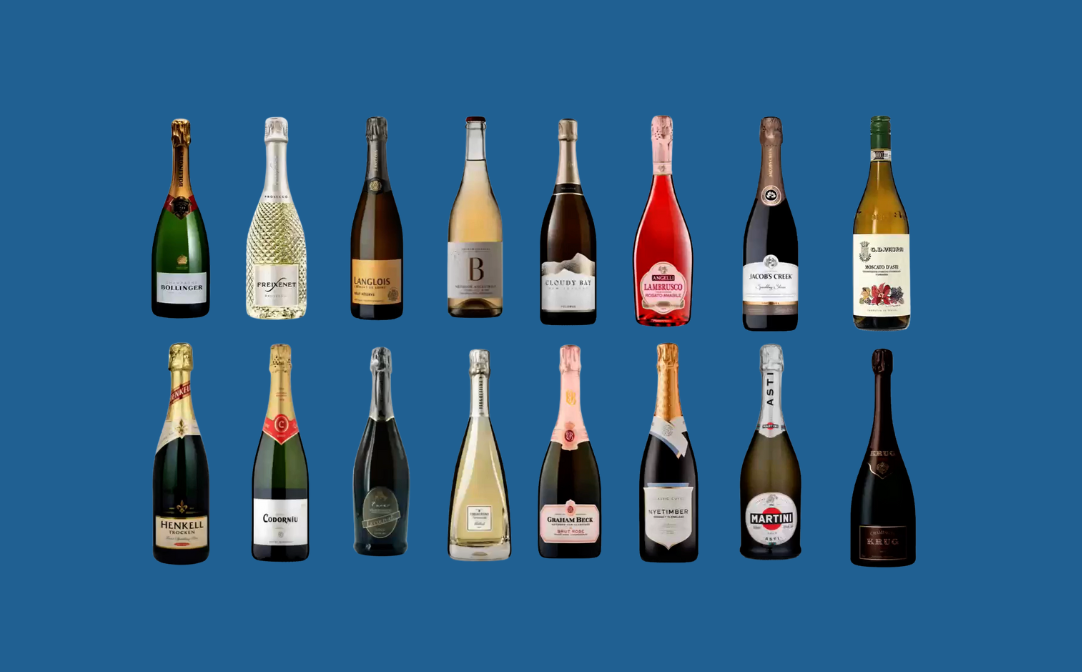
Some sparkling wines are designed to be enjoyed as young as possible, showing bright, primary fruit. Others only reach their full potential after many years of ageing. Availability also varies widely: some styles are familiar supermarket staples, while others are rare and highly sought-after.
Despite this diversity, sparkling wine accounts for just 7–8% of global wine production.
Where sparkling wine is produced and consumed
Sparkling wine is produced all over the world. The largest producing countries by volume and value include Italy, France, Germany, Spain and the USA, with rapidly growing production in countries such as the UK, Australia, Brazil and Portugal.
On the consumption side, Germany, France, the USA, Russia, Italy and the UK are among the biggest sparkling wine markets.
Although overall global wine consumption has declined in recent decades, demand for sparkling wine has continued to rise over the past 25 years. This reflects changing drinking habits, with many consumers choosing to drink less but prioritise quality, versatility and occasion.
If you’d like to explore sparkling wine in more depth, WSET qualifications cover styles, production methods and regions in increasing detail across different levels. Find a course near you.
Traditional method sparkling wine explained
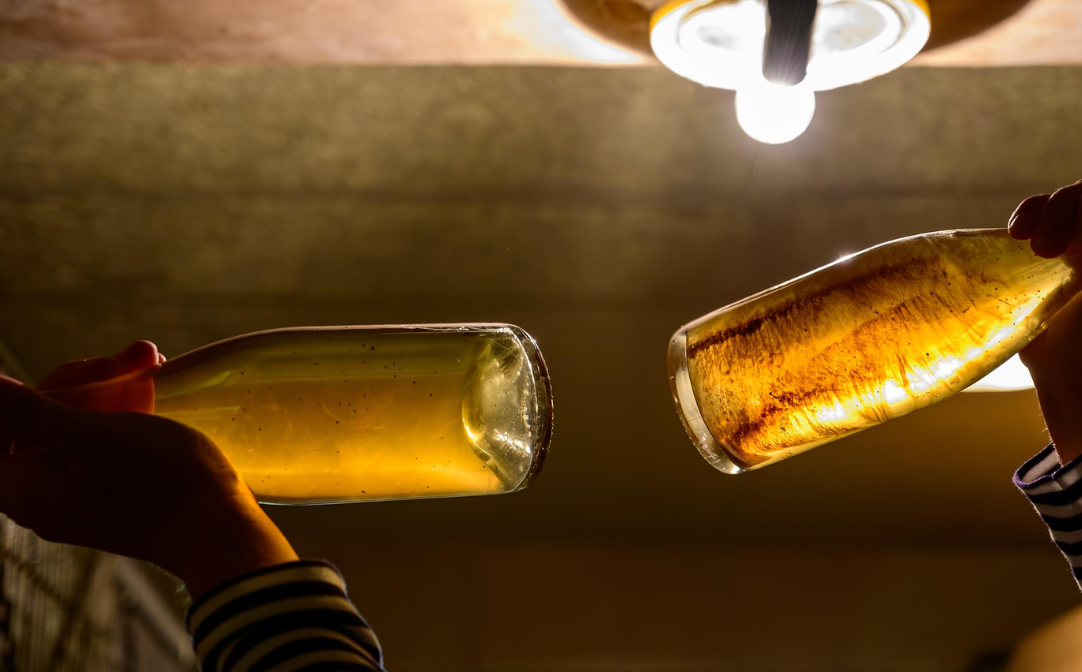
Traditional method sparkling wines are defined by a second fermentation that takes place inside the bottle, followed by ageing on the lees. This is the method used for Champagne and many of the world’s most premium sparkling wines.
How the traditional method works
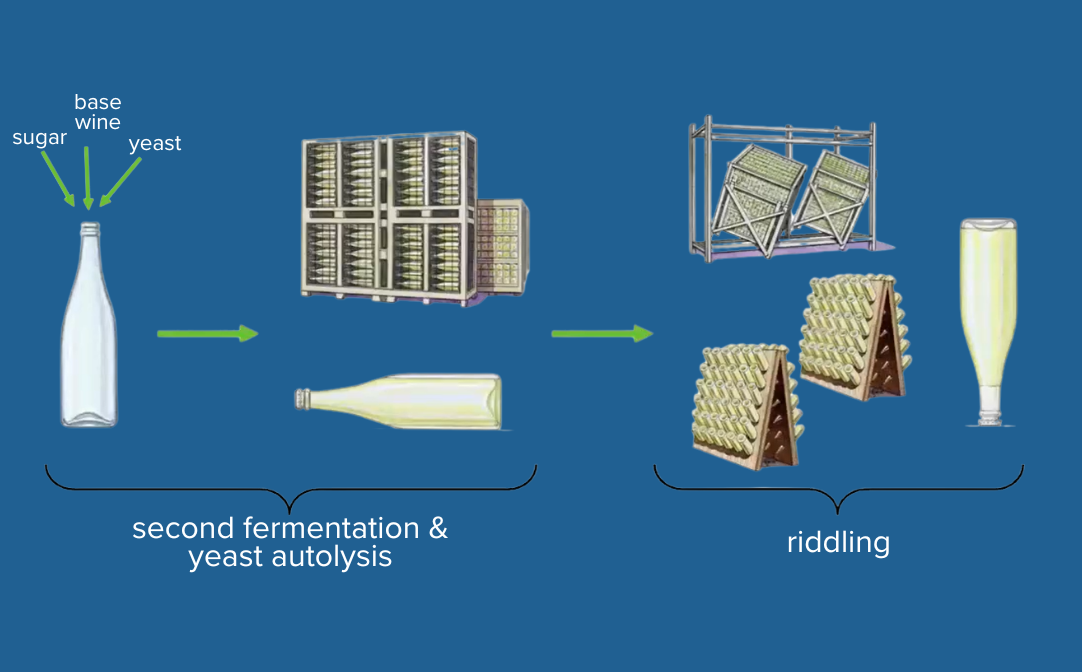
Production begins with a still base wine, which may be a blend of different grape varieties, vineyard sites and vintages. Yeast and sugar are added, and the wine is sealed in bottle with a crown cap. A second fermentation then takes place inside the bottle, producing carbon dioxide that becomes trapped and forms the bubbles.
As fermentation finishes, the yeast cells die and form lees. Over time, these lees break down in a process known as autolysis, releasing aromas such as brioche, toast, pastry and cream. The longer the wine remains on its lees, the more intense and complex these flavours become.
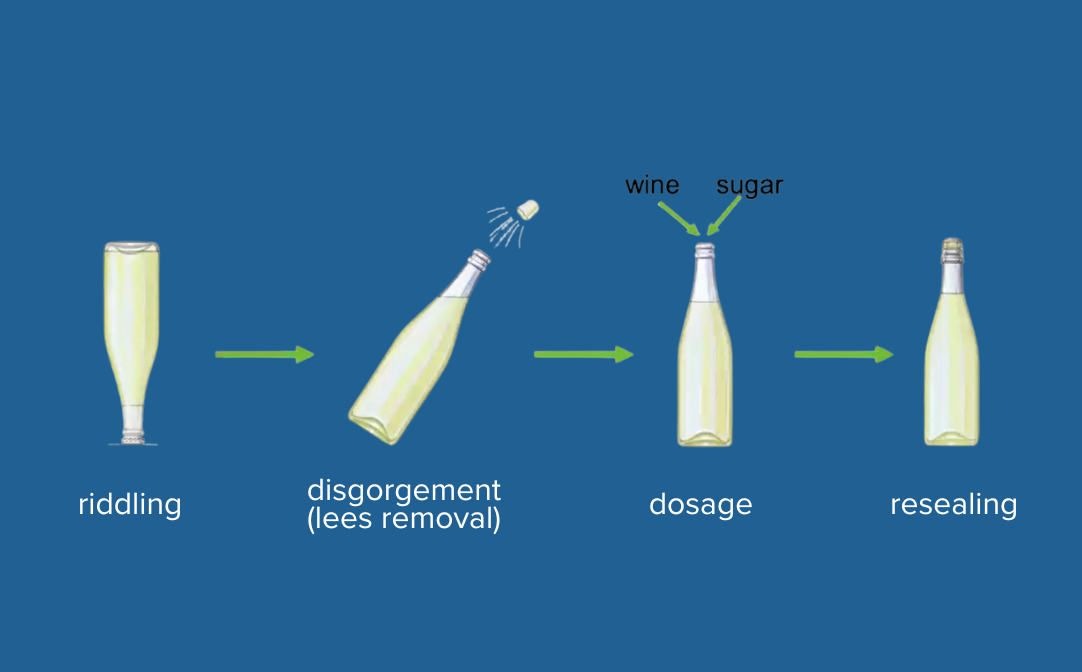
Once lees ageing is complete, the bottles are riddled to collect the sediment in the neck, then disgorged. A small amount of wine and sugar (the dosage) is added before the bottle is sealed again and rested prior to release.
Traditional method styles and regions
Champagne is the benchmark for traditional method sparkling wine, typically made from Chardonnay, Pinot Noir and Pinot Meunier. However, high-quality traditional method wines are produced worldwide.
In France, Crémant wines are made in several regions using the traditional method, often incorporating local grape varieties and offering excellent value compared to Champagne.
English sparkling wine is also made using the traditional method, with high acidity and precision driven by the country’s cool climate.
Italy produces traditional method wines such as Franciacorta and Trento DOC, while Spain is known for Cava and premium Corpinnat, made using native grape varieties including Xarel·lo, Macabeo and Parellada.
Beyond Europe, notable traditional method sparkling wines are produced in New Zealand, Australia (particularly Tasmania and the Mornington Peninsula) and South Africa, where the style is known as Cap Classique.
Tank method sparkling wine explained
The tank method (also known as the Charmat method) also involves a second fermentation, but this takes place in a sealed stainless-steel tank rather than in bottle.
Unlike traditional method wines, tank method wines spend little or no time ageing on lees. The focus is on preserving primary fruit and aromatic freshness.
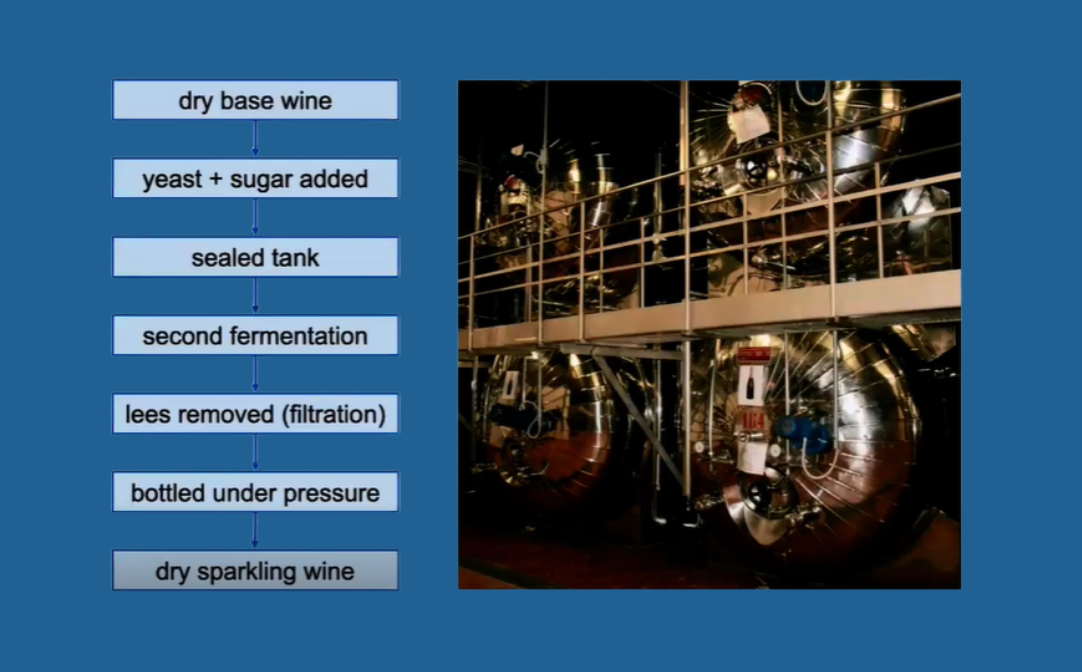
Characteristics of tank method sparkling wine
Tank method wines are typically light, fresh and fruit-driven, with softer bubbles and a more approachable style. They are designed to be consumed young and are generally more affordable due to faster production and lower labour requirements.
Common grape varieties used include Glera (Prosecco), Moscato, Riesling and the various Lambrusco grapes.
Prosecco and other tank method styles
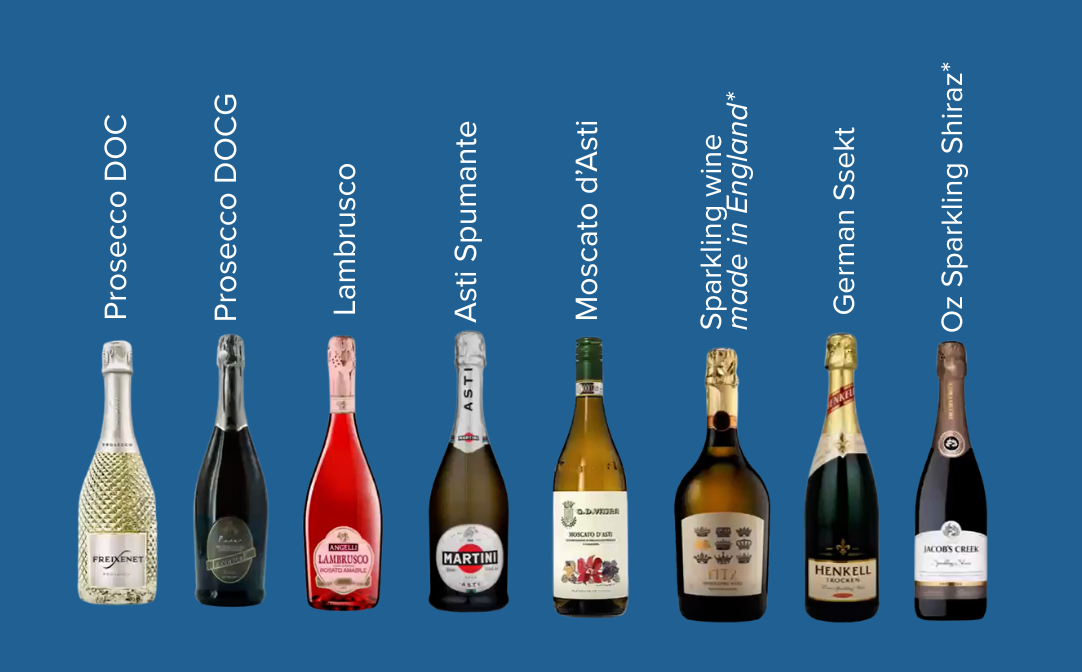
Prosecco is the most widely recognised tank method sparkling wine. Prosecco DOC covers a large production area in north-east Italy and is typically fresh, lightly sparkling and fruit-forward.
At a higher quality level, Prosecco DOCG comes from a smaller, hillier zone around Conegliano and Valdobbiadene. These wines tend to show greater finesse, structure and expression of site.
Other important tank method styles include Asti Spumante and Moscato d’Asti, which are made from highly aromatic Moscato grapes and often involve just one fermentation, preserving intense floral and fruit aromas.
Tank method sparkling wines are also produced globally, including German Sekt made from Riesling and Australian sparkling Shiraz, where the method helps highlight vibrant fruit character.
Ancestral method and pét-nat sparkling wines
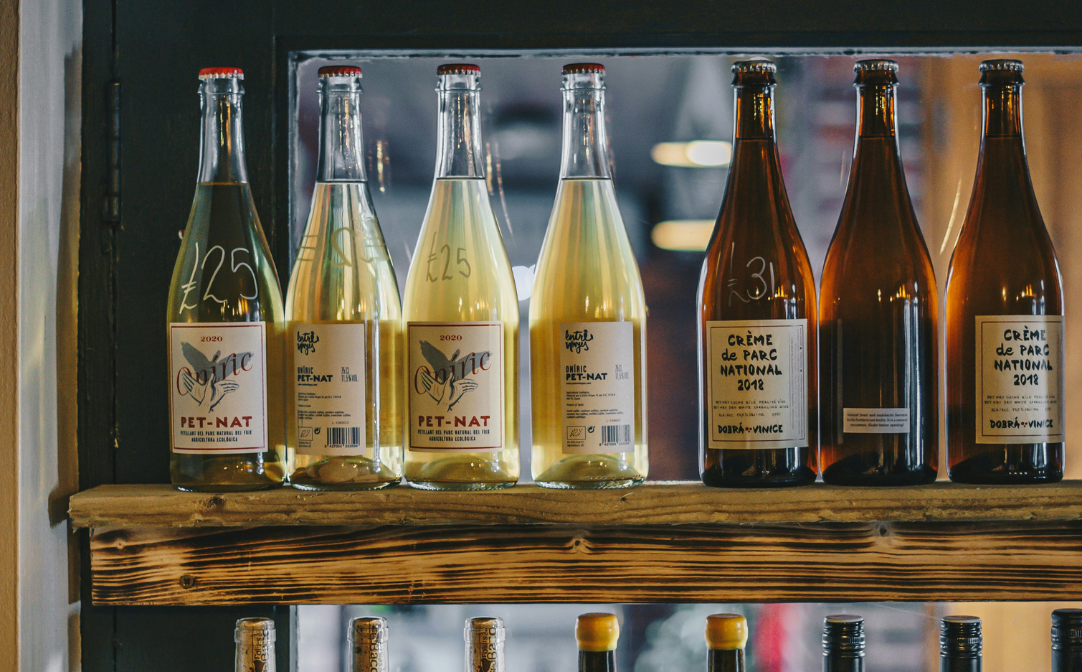
The ancestral method is the oldest way of making sparkling wine and is often labelled as pét-nat (pétillant naturel) today. These wines are bottled while still undergoing their first fermentation, trapping carbon dioxide naturally. Because fermentation finishes in bottle, pét-nats usually contain lees, giving them a cloudy appearance. Ancestral-method wines are typically lightly sparkling, softly textured and fruit-driven. They are often sealed with crown caps and are closely associated with minimal-intervention and natural winemaking. Classic examples include Blanquette de Limoux and other traditional ancestral styles from France, alongside modern pét-nats made around the world in every colour and style. A related style is Col Fondo Prosecco, which is bottled with its lees and often gently shaken before serving.
Key sparkling wine terms explained
Understanding a few commonly used terms can make sparkling wine labels much easier to navigate and help you identify the style you’re looking for.
Dosage
Dosage refers to the small amount of sweetened wine (liqueur d’expédition) added after disgorgement. It adjusts the final sweetness level and plays an important role in balancing acidity and overall style.
Sweetness levels
Sparkling wines are commonly labelled using the following terms, from driest to sweetest:
-
Brut Nature / Zero Dosage (0–3 g/L)
-
Extra Brut (0–6 g/L)
-
Brut (0–12 g/L)
-
Extra Dry / Extra Sec (12–17 g/L)
-
Sec (17–32 g/L)
-
Demi-Sec (32–50 g/L)
-
Doux (50+ g/L)
Confusingly, Extra Dry is actually sweeter than Brut, a term most commonly seen on Prosecco labels.
Non-vintage (NV)
Non-vintage sparkling wines are made from a blend of multiple harvest years. This allows producers to maintain a consistent house style from year to year and accounts for the majority of sparkling wine production worldwide.
Vintage
Vintage sparkling wines are made from grapes harvested in a single year. They are typically produced only in the best vintages and are often aged for longer, resulting in greater complexity.
Blanc de Blancs
Literally meaning “white from whites”, this term refers to sparkling wines made exclusively from white grape varieties, most commonly Chardonnay.
Blanc de Noirs
Meaning “white from blacks”, these sparkling wines are made from dark-skinned grapes such as Pinot Noir or Pinot Meunier, but vinified as white wine.
Sparkling wine FAQs
Why are sparkling wine bottles shaped the way they are?
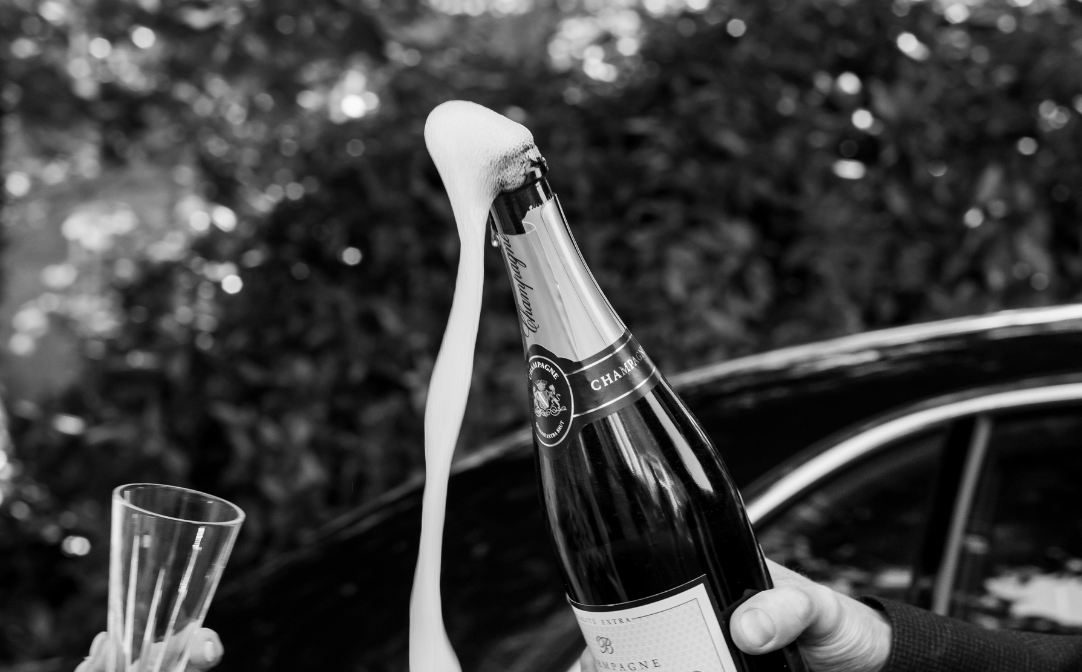
Sparkling wine bottles are designed to withstand pressure. Compared to still wine bottles, they are made from thicker, heavier glass to safely contain the carbon dioxide produced during fermentation.
In terms of shape, sparkling wine bottles are broadly similar to Burgundy-style bottles, but slightly broader and more robust. While producers sometimes experiment with bottle design for aesthetic or branding reasons, the key functional requirement is strength — sparkling wine bottles must safely hold significant internal pressure.
Is vintage sparkling wine worth the price?
Whether vintage sparkling wine is worth the premium depends largely on personal taste and drinking preferences.
Vintage sparkling wines are typically aged for longer and are made to express the character of a specific year. As a result, they tend to develop secondary and tertiary aromas such as brioche, nuts and savoury complexity over time.
If you prefer fresh, fruit-driven sparkling wines with primary aromas, vintage styles may not offer additional value. However, if you enjoy complexity, depth and the effects of long bottle ageing, the price premium reflects both time and quality.
How much alcohol is added during the second fermentation?
In traditional method sparkling wine, the second fermentation typically increases alcohol by around 1–1.5% ABV.
Producers control this very precisely by adding a measured amount of sugar and yeast. Because the relationship between sugar and alcohol production is well understood, winemakers can accurately predict the final alcohol level and pressure in the bottle.
How is the final alcohol level controlled in sparkling wine?
The final alcohol level is controlled by the exact quantity of sugar added before fermentation. Winemakers calculate this carefully to achieve both the desired alcohol content and the required level of carbonation.
This precision is a fundamental part of sparkling winemaking and is tightly regulated in many appellations, particularly for traditional method wines.
Further reading on sparkling wine
If you’d like to explore specific styles and regions in more detail, you may also enjoy:
-
An introduction to sparkling wine – a quick overview of popular styles from Champagne to Prosecco
-
Sparkling wine production: making traditional method wines – a deeper look at how traditional method sparkling wines are made
-
Prosecco DOCG: what is premium Prosecco? – exploring quality, terroir and style in Prosecco’s top classification
-
The rise of English sparkling wine – how England became a leading sparkling wine producer
-
The grape varieties of Champagne – understanding how grape choice shapes Champagne style and quality
