


Whisky is one of the most compelling spirits in the world. Made from fermented grain, distilled and matured in oak, it reflects decisions at every stage of production. Grain choice, yeast selection, still design, cask type and climate all shape the final flavour.
While Scotland, Ireland and the United States are often seen as whisky’s traditional heartlands, production now spans the globe. World whisky refers to styles made beyond these established regions. Many draw inspiration from traditional models, yet they are shaped by different climates, regulations and production philosophies.
Even the spelling varies. Ireland and the United States tend to use “whiskey”, while most other countries use “whisky”. The difference is customary rather than legal. If you are curious about the origins of the two spellings, you can explore that in our blog Whisky or Whiskey: Is there a difference and does it matter?
As new whisky-producing countries emerge, three forces increasingly define their identity: climate, regulation and blending approach.
Climate
Climate plays a significant role in whisky maturation. In warmer regions, higher temperatures accelerate the interaction between spirit and oak. Evaporation rates, often called the angel’s share, can be far higher than in cooler climates. This concentrates flavour and increases wood extraction in a shorter time.
In cooler regions, maturation proceeds more slowly. Oak influence integrates gradually and spirit character develops over a longer period. These climatic differences are especially visible in newer whisky-producing countries.
India
India has a long history with whisky, though much of its earlier production was molasses-based and not recognised internationally as whisky. In 2004, India released its first single malt made from 100 percent barley, marking a shift towards globally recognised styles.
Indian single malts are shaped by high evaporation rates, often reaching 10 to 15 percent annually. Whiskies aged four to five years can show pronounced oak influence due to accelerated maturation. Six-row barley, commonly grown in northern states, contributes texture and spice. Producers also experiment with flexible cask approaches and finishing techniques.
In 2025, the Indian Malt Whisky Association was launched to establish clearer production standards. These broadly follow the Scotch model, with one key distinction: spirit must be distilled to no more than 60 percent ABV.
The combination of intense climate and evolving regulation has positioned Indian single malts as bold and increasingly influential within the global category.
Australia
Australia’s modern whisky revival began in 1992, when legal reforms enabled small-scale distilling. Since then, more than 220 licensed craft distillers have emerged across diverse climatic zones.
Australian whisky is often characterised by innovation and flexibility. Climatic variation ranges from cool maritime Tasmania to hotter mainland regions. Producers use diverse grains, including roasted malts and heritage varieties. Smaller casks are common, intensifying wood influence. Fortified wine casks such as Apera and Tawny frequently contribute rich fruit notes. Peat techniques vary, sometimes involving smoke applied after malting. Age statements are often secondary to flavour maturity.
With fewer historic constraints than older whisky-producing nations, Australia’s whisky identity is shaped as much by experimentation as by tradition.
Canada
Canada’s whisky industry is highly consolidated, though a growing number of micro-distilleries are also active. A defining feature of Canadian whisky is its blending philosophy. Rather than working from a single mash bill, distillers typically process each grain separately, creating different flavour streams for blending.
Base whiskies are usually made from corn and distilled in column stills, producing a lighter spirit. Flavouring whiskies are most commonly made from rye and distilled to lower strength, contributing greater aromatic intensity. Even in small quantities, rye can significantly shape character, which is why Canadian whisky is often referred to as rye despite there being no legal minimum rye requirement.
By law, Canadian whisky must be mashed, distilled and aged in Canada for at least three years in wooden barrels no larger than 700 litres and bottled at no less than 40 percent ABV. There are few restrictions on grain types or production methods. Uniquely, a limited amount of other spirits or wines may be added, provided the final whisky retains the aroma, taste and character generally attributed to Canadian whisky.
United States
While Bourbon and Rye remain the most established American categories, the United States has formally recognised American Single Malt Whiskey.
To qualify, it must be made from 100 percent malted barley and distilled at a single distillery. It must be mashed, distilled and matured in the United States, aged in casks no larger than 700 litres, distilled to no more than 80 percent ABV and bottled at no less than 40 percent ABV. A minimum maturation period of two years is required.
Unlike Bourbon and Rye, there are no restrictions on malt roasting levels or still type. Producers may use pot stills, column stills or hybrids, resulting in significant stylistic diversity.
The formal recognition of American Single Malt reflects the growing confidence of US producers in establishing a distinct single malt identity alongside traditional American whiskey styles.
Japan
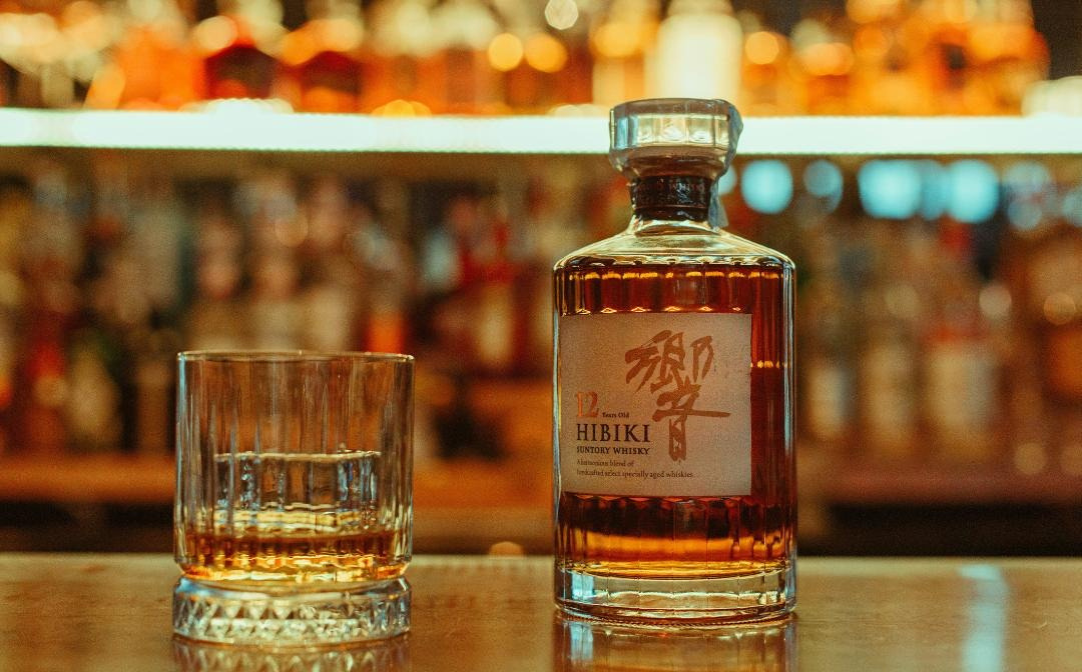
Japan’s whisky industry began in 1923 with the establishment of Yamazaki Distillery. Shinjiro Torii founded the distillery, and Masataka Taketsuru, who had studied distilling in Scotland, played a central role in shaping production. Today, major players include Suntory, Nikka and Kirin, alongside a smaller group of independent distilleries.
Japanese whisky follows the Scottish model in structure. Malt whiskies are produced in pot stills, grain whiskies in column stills and blends dominate domestic sales.
One important structural difference sets Japan apart. Major companies do not trade stock between distilleries. Each distillery must therefore create sufficient diversity internally to meet blending requirements. Large sites operate multiple still designs to generate varied flavour profiles.
Japanese producers may use peated or unpeated malt and a wide range of maturation approaches. A distinctive feature is the use of mizunara oak, Quercus mongolica. Although difficult to work with due to its tendency to leak, mizunara is valued for aromatic qualities often described as sandalwood or cedar.
Under Japanese law, whisky must be made from malted grains or malted grains with other grains and distilled to less than 95 percent ABV. Historically, labelling lacked clarity. In response, the Japan Spirits and Liqueurs Makers Association introduced guidelines effective from 2024. For a spirit to be labelled as Japanese whisky, it must be made and matured in Japan, use malted grains, be distilled to less than 95 percent ABV, be matured in wooden casks of 700 litres or less for at least three years and be bottled in Japan at no less than 40 percent ABV.
Despite the relatively small number of distilleries, stylistic diversity ranges from delicately floral to boldly peated.
Other regions
Whisky is now produced in many countries worldwide. Without long-established traditions, newer producers often combine elements from multiple whisky cultures.
Sweden’s Mackmyra uses Scottish-style stills but experiments with juniper-smoked malt and small-format Swedish oak barrels. Taiwan’s Kavalan, established in 2005, produces malt whiskies in a broadly Scottish style but matures them in a hot, humid climate that accelerates flavour development.
Many of these producers remain relatively small, though some have achieved significant international recognition.
A changing category
As whisky production expands globally, the category is shaped by climate, legislation and creative interpretation.
From Canada’s blending philosophy and rye character to Japan’s internal diversity, India’s rapid maturation and Australia’s experimental energy, world whisky reflects both tradition and adaptation.
For students and enthusiasts alike, exploring these styles offers insight into how environment, regulation and production choices continue to shape one of the world’s most dynamic spirits.
