


What does it really mean to “have a good palate”? And is it something you’re born with, or something you can build over time?
At WSET, we believe tasting is a skill that can be developed through curiosity, practice and the right framework. Whether you’re just starting your journey or looking to refine your technique, learning how to taste more attentively can unlock a deeper understanding and enjoyment of drinks.
In this article, wine educator and writer Heather Dougherty DipWSET explores how to train your palate, breaking down the sensory skills involved and offering practical ways to develop them in everyday life. With extensive experience in sparkling wine, wine education and judging at an international level, Heather brings both expertise and a clear, accessible approach to one of the most fundamental skills in drinks education.
Does this situation sound familiar? An experienced wine taster cleverly and concisely describes what a wine smells and tastes like, what it feels like in the mouth and sums up how good it is. If you’ve ever wondered “how do they do that?”, this blog post is for you.
Can you train your palate? Emphatically, yes. No-one is born with the innate ability to describe wines or other drinks; it’s a skill, like swimming or driving a car, that we learn - and you can learn it too.
Palate training - what skills are we talking about?
Tasting is in fact more than just taste: attentive tasting includes all our senses.
- Sight - the colour of the wine, and bubbles in a sparkling wine
- Sound - with sparkling wines, we can tune in to the sound of the bubbles popping. We can even distinguish between the sound of bubbles in traditional method sparkling wines, tank method wines like Prosecco and carbonated water. Try it out, you might be surprised at what you already know how to do
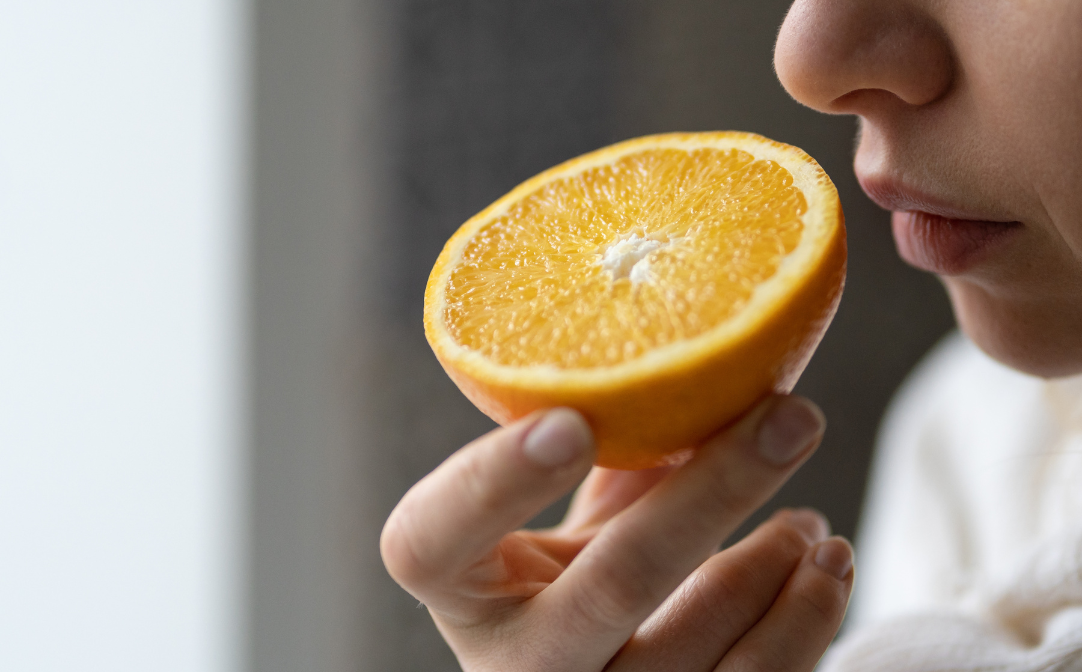
- Smell -probably the most important sense here, and how we recognise any complex, real-world aromas and flavours
- Taste - our tongues can actually only discern the most basic building blocks of flavour: sweet, salty, bitter, sour and umami. Anything more than that is in fact detected by our noses while the drink is in our mouths
- Touch - how the wine feels in the mouth
If that all sounds a bit complicated, think of palate training as simply paying full attention when you’re tasting and making use of the information that the wine is giving you.
Why is palate training important?
If you work in drinks, it’s important to be able to assess a wine, to tell colleagues or customers what it tastes like, or to progress in wine qualifications.
For wine enthusiasts, training your palate will help you to be a better taster, to appreciate wines more fully and to make connections between them, helping you find new wines that you will enjoy.
How to develop a palate
The most important principle of palate training is practice – just as you wouldn’t expect to pass a driving test without hours at the wheel under your belt, so you can’t expect to become an expert taster overnight.
How to develop your sense of taste: take opportunities to attend wine tastings, or to find other ways to compare wines side by side in more impromptu ways. Comparing wines with other wines is a sure fire way to sharpen up your tasting skills – how does your glass of Pinot Noir differ from your friend’s glass of Shiraz, for example?
Wine tastings where different wines are available to taste side by side are ideal environments, but they aren’t the only time that you can practice your skills. And what you learn isn’t only applicable to wine, but also to beer, sake and other spirits - even foods.
Treat everyday occasions as opportunities. What does that cup of coffee smell of? How does the sensation of drinking water compare with a cup of tea, or a milky coffee? What do blackberries smell and taste of? Can you identify which spices are included in a particular dish you’re eating? That’s all part of training your palate. Think about all the times in a day that you are faced with aromas and flavours - they are all opportunities to practice.
If you want to understand how pivotal your sense of smell is to “taste”, try this fun exercise. Hold your nose and put a basil leaf in your mouth. Still holding your nose, chew the leaf and notice the flavours: it’s probably just faintly grassy. Let go of your nose while the basil is still in your mouth and voilà – its full aromatic richness is revealed. It’s a great way to underline that it’s your nose which is sensing all those complex aromas.
These exercises will build up what’s known as your flavour memory, a memory bank of aromas and flavours of wines that you add to every time you taste. Think of it as a filing system in your brain: the more often you go to add or retrieve a taste memory, the more familiar the path becomes and the easier and faster it will be to access.
Every day really is a school day when training your palate.
How WSET’s Systematic Approach to Tasting can help
While we all experience tastes individually, the WSET Systematic Approach to Tasting (SAT) gives us a common framework that we can all use, so that we have a common language.
By prompting us to include appearance, nose, palate and conclusions, it reminds us not to forget any part of the wine’s make up. Its lexicon provides handy prompts that help us move from general to specific when identifying core flavour families.
For example, citrus aromas are a common element in many white wines. To begin with, you might be happy with that broad definition. But using the lexicon, there are suggestions for individual fruits (grapefruit, lemon, lime and orange) which can guide you towards something more precise and useful.
Wines also have other elements beyond aromas and flavours that we need to pay attention to:
- Texture - how the wine feels in the mouth: is it sleek and silky, velvety, or slightly rough feeling?
- Structure - the build of the wine, including acidity for a white wine, acid and tannin for a red wine, as well as the body, or weight, of the wine in the mouth
All these elements then come together in the glass, and they all have a say in how we experience a wine.
Things to consider when training your palate
When you’re thinking about how to develop your sense of taste, the environment can have a big impact. The temperature (of the room, of the wine), lighting, even noise, as well as what you’ve recently eaten can all have an influence. And subtle, delicate wines are hard to fully appreciate in the lee of a smoky barbecue on a hot, sunny day. We can’t necessarily change these things – but understanding that they influence our perceptions is important.
Also think about the size and shape of the glassware you’re using the same wine from a small straight-sided tumbler and a larger, tulip-shaped classic wine glass and see (or taste) the difference.
Bringing it all together
To sum up: compare, compare, compare - compare wines with each other, wines with other drinks. It’s one of the best ways to learn.
We can all become better tasters, by using opportunities to taste whenever they arise. Be curious and you’ll never stop learning.
Content published on these blog pages is intended for general interest only and does not constitute official WSET course material.
About the author
Heather Dougherty is a freelance wine educator, writer and judge based in Surrey. She gained the WSET Diploma in 2005 and has since built a particular specialism in sparkling wines, becoming UK Champagne Ambassador in 2018 and achieving the Wine Scholar Guild Champagne Master Level with Highest Honours.
Heather is an Advanced Cava Educator and a certified Rioja and Rhône educator, with a broad interest spanning regions including Prosecco Superiore DOCG, Franciacorta, the Loire Valley, Languedoc and Roussillon.
A past Chair of the Association of Wine Educators and a member of the Circle of Wine Writers, she is also a senior judge at the Decanter World Wine Awards. Alongside her writing for trade publications such as Harpers and The Buyer, Heather regularly leads tastings and educational events for both consumer and trade audiences.
