


From ruby and tawny to vintage and white styles, Port is one of the world’s most historic and distinctive fortified wines. But how did this wine from northern Portugal become so closely tied to British drinking culture and what makes the different styles taste the way they do?
In this guide, award-winning drinks writer Henry Jeffreys explores the history of Port, how it is made and the key styles to know, from everyday ruby Port to long-aged vintage expressions.
Port is a fortified wine from northern Portugal. It owes its existence to Britain's fractious relationship with its neighbour, France. Since the 12th century, wine in England had come from Bordeaux. But when William III and Mary came to the throne in 1688 in the so-called Glorious Revolution, it ushered in a period of on-and-off conflict that would continue until the defeat of Napoleon in 1815.
Wine shipped from France became subject to high taxation. By 1698, duty on French wine was £47 a cask when the wine itself cost only £12. A new source of affordable wine had to be found, so England turned to its oldest ally, Portugal. Merchants began shipping wine from Porto in the north of the country. This arrangement was cemented with the signing of the Methuen Treaty in 1703, which set the duty on Portuguese wine at a third of that on French wine.
The only problem was that customers back home didn't much like the thin red wine made around the city. There was even a poem from 1693 by Richard Ames titled Anything but Port. To find something more to English tastes, intrepid merchants headed up the river into the Douro valley, where summers were far hotter.
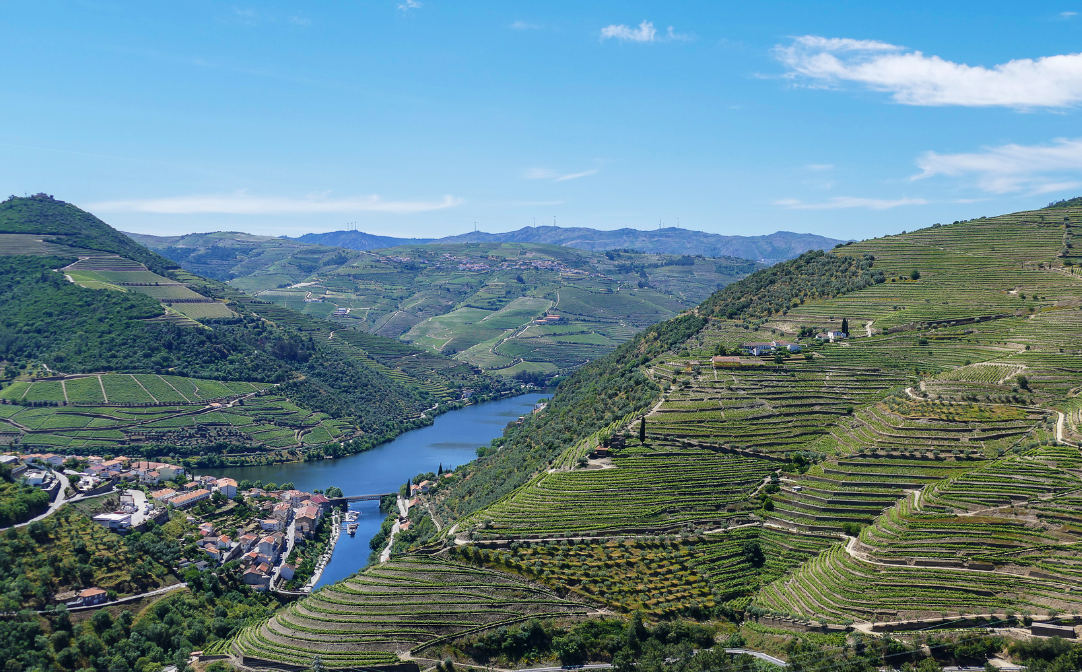
The Douro region, Portugal
Pioneering merchants included Job Bearsley from London, who founded a firm in 1692 that would become Taylor's. The robust up-country wine was much more to English tastes. Merchants bought wine from growers and shipped it down the treacherous rapids of the Douro river to Vila Nova de Gaia, across the river from Porto. Their warehouses, known as lodges, are still there to this day. Here they would fortify the finished wine with brandy and ship it off to England. The aim was to help it travel better but customers also liked a strong wine. At this stage, most port would have been dry. George Robinson, in his 1754 book Port, complained of a grower who "is in the habit of checking fermentation of the wines too soon, by putting brandy into them while still fermenting; a practice which must be considered DIABOLICAL."
In the mid-18th century, the mainly British merchants fell out with the Portuguese growers. Both parties accused the other of adulterating the wine with elderberries or wine from outside the region. The merchants refused to buy, so the growers enlisted the help of the Prime Minister of Portugal, Sebastião José de Carvalho e Melo, later the Marquess of Pombal. In 1756, he formed the Companhia Geral da Agricultura e Vinhos do Alto Douro, which would buy all the wine, set the price, and sell it on to the shippers. Crucially, Pombal also demarcated the boundaries of the port region.
Port became immensely popular in Georgian England. The wine would be shipped over in cask and then bottled. Port lovers discovered that the fiery, strong liquid did something magical after years in the bottle, and so developed the cult of drinking long-aged wines. In the 1820 vintage the grapes became so ripe and full of sugar that they could not ferment fully. The resulting sweet wines were a sensation. To replicate the style, producers began adding brandy sooner to arrest fermentation. But not everyone approved. One merchant, Joseph James Forrester, wrote a paper in 1844 complaining that port had become a "nauseous, fiery compound of sweets, colours and alcohol." Forrester is one of the giants of port: he mapped the Douro river, and catalogued the different grape varieties. Eventually, however, the sweet style won out.
Port was popular with all sections of society in Victorian Britain: there was vintage port for the rich and cheap ruby port, often drunk with lemonade in pubs. By the mid-19th century, around 90 per cent of the wine drunk in Britain was either port or sherry.
But hard times were coming. In the 1870s, the phylloxera louse arrived in the Douro and destroyed the vineyards. The region replanted and recovered, only to be hit by the great disasters of the 20th century: the two World Wars and the Depression. From 1928 to 1970, Portugal was ruled by the authoritarian dictator António de Oliveira Salazar, and the country became a backwater. The industry saw some great vintages, such as the legendary 1963, but it proved hard to make money, and many old family firms sold up.
Portugal joining the EEC in 1986 brought an end the restrictive practices that had plagued the industry. In 1991, producers were allowed to buy aguardente (brandy) on the open market rather than from the state monopoly. Despite consolidation, many old family companies survived such as the Symington group, which owns Graham's among others, and Taylor, Fladgate and Yeatman.
Changing tastes in the 20th century favoured lighter wines. In the 1990s and 2000s, many vineyards were turned over to table wine production as the market for cheaper ports declined. According to shippers, however, the market for more premium styles is holding up.
As one of the world's hottest wine regions, the changing climate poses a particular challenge in the Douro. Producers are seeking out higher-altitude vineyards and researching more heat-resistant grape varieties. To help address this, Taylor's founded the Porto Protocol, an organisation dedicated to finding solutions to these problems.
How Port Is Made
Port is made from very ripe black grapes such as Touriga Nacional and Touriga Franca. Dozens of varieties are permitted. Small amounts of port are also made from white grapes. The grapes are crushed, sometimes by foot, to extract as much tannin and colour as possible. After two or three days when about half the sugar has turned to alcohol, grape brandy called aguardente is added, which kills the yeast and leaves a sweet wine of around 20% alcohol.
Depending on the quality, this wine will be used in ruby, tawny, or vintage port (see definitions below).
Port styles explained
Ruby: The most basic style, usually aged in large wooden vats for two or three years before bottling.
Late Bottled Vintage (LBV): From a single year, but aged for up to six years in wood, so it is ready to drink once bottled. Some are bottled unfiltered and can age surprisingly well.
Vintage Port: Only in exceptional years does a producer "declare" a vintage. It comes from the top vineyards and is bottled after just two years of ageing. In the past, vintage ports required at least 20 years in bottle, but they are now accessible much younger. They should be decanted, as they throw a sediment.
Single Quinta Port: In years not good enough for a full vintage declaration, producers release a wine under a single estate label. These offer exceptional value and mature more quickly.
Tawny Port: Aged longer in barrel with oxygen contact until the wine loses its red colour and takes on a nutty, amber quality. Usually sold with average-age statements such as 10, 20, or 40 years old. Vintage tawnies are known as colheitas.
White Port: Made with white grapes, this increasingly popular style can be bottled young and fresh to preserve fruit flavours, or aged to bring out more savoury, nutty character. It is particularly good with tonic water.
How to Drink Port
Port is an extremely versatile wine that shouldn't be kept only for Stilton on Christmas Day. Tawnies in particular are great with all kinds of cheeses, charcuterie, and puddings, while young vintage styles have a great affinity with chocolate.
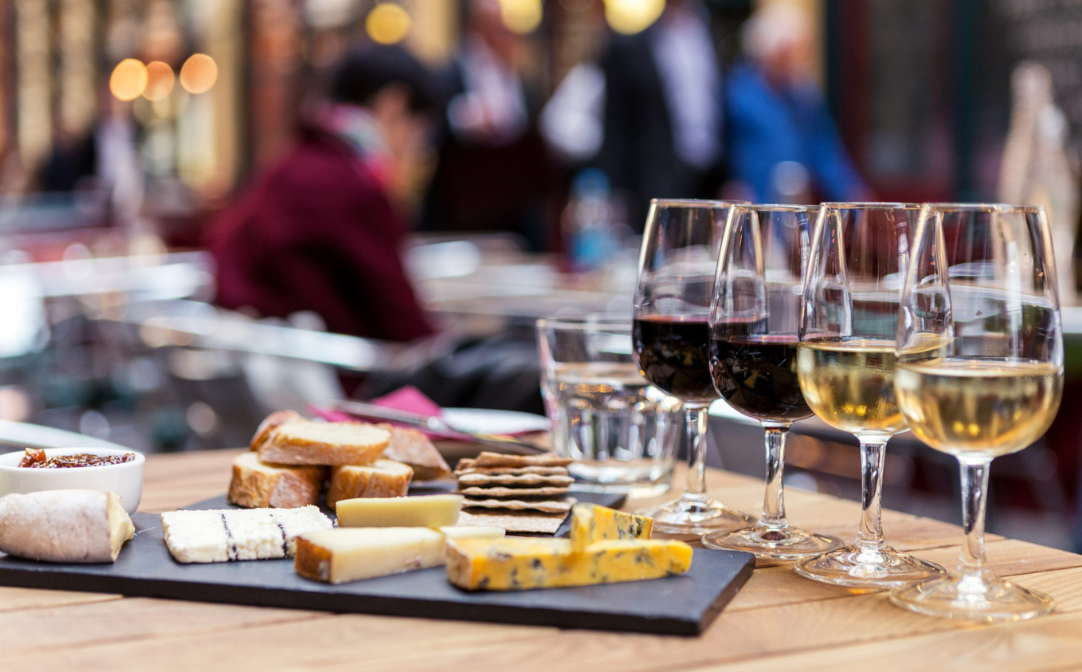
Image by Cheese at Leadenhall
Port, especially white port, makes a superb cocktail ingredient.
About the author
Henry Jeffreys is an award-winning drinks writer based in London. He is a regular contributor to publications including the Spectator, Daily Telegraph, Decanter, JancisRobinson.com and Club Oenologique and has appeared on BBC Radio 4 and BBC Two. He is the author of several books including Empire of Booze, The Home Bar and Vines in a Cold Climate, which won Drink Book of the Year at the 2023 Fortnum & Mason Awards. In 2024, he launched the Intoxicating History podcast with Tom Parker Bowles.
