


When it comes to iconic food and drink pairings, few duos are as universally loved as beer and crisps. Think fresh, cold pints served alongside torn open packets on pub tables.
Recently, we explored this irresistible combination with Ed Wicks DipWSET, breaking down what makes each component so delicious, why they work so brilliantly together and what some of the best pairings are.
Whether you're a casual snacker or a certified beer geek, this guide will take you through the essential ingredients for the perfect pint and packet experience.
First, a look at beer
Beer is one of humanity’s oldest drinks, yet its foundations remain wonderfully simple: malt, water, yeast and hops.
Despite these humble ingredients, different types of malt and hops give beers their own unique flavours - which, much like wine, means they pair with food in different ways.
Malt
Malted grains contribute the sweetest, toastiest, warmest notes in beer. Base malts lay the foundation, while speciality malts add everything from biscuit and toasted bread to caramel, nuts, dried fruit, chocolate and coffee. (If you've ever smelled a brewery mash tun, you know this magic.)
Hops:
Hops bring bitterness, aroma and balance. Their personality ranges from grapefruit and blackcurrant to florals, spices, pine and tropical fruit - all depending on the variety.
Yeast
Yeast doesn’t just create alcohol; it shapes the personality of a beer.
- Esters provide fruity aromas (think banana or pear)
- Phenols add spicy notes like clove or pepper
Add in other organisms, like lactic acid bacteria (hello, yoghurt‑like tang), and you get beers that are funky, sour or deeply complex.
What makes a crisp?
Crisps, or chips to some, may seem simple but they’re a surprisingly diverse snack! Here’s a look at the key components of a crisp:
- Raw materials: potato, corn, other grains or vegetables
- Cooking methods: fried, baked, roasted
- Seasonings: from sea salt to intense spice blends
- Artificial flavourings: some styles are natural and traditional, others embrace modern flavour science
Like beer, crisps range from clean and classic to bold and experimental - making them a dream pairing partner for drinks.
How to taste crisps: the WSET SAT for crisps
We all know how to eat crisps - but tasting them is another thing entirely.
In a nod to the Systematic Approach to Tasting used across all of our WSET qualifications, Ed has created a fun version to guide us through the tasting of crisps, designed to help describe flavour, assess quality and understand why certain crisp styles work so well with different beers. View our SAT for crisps here.
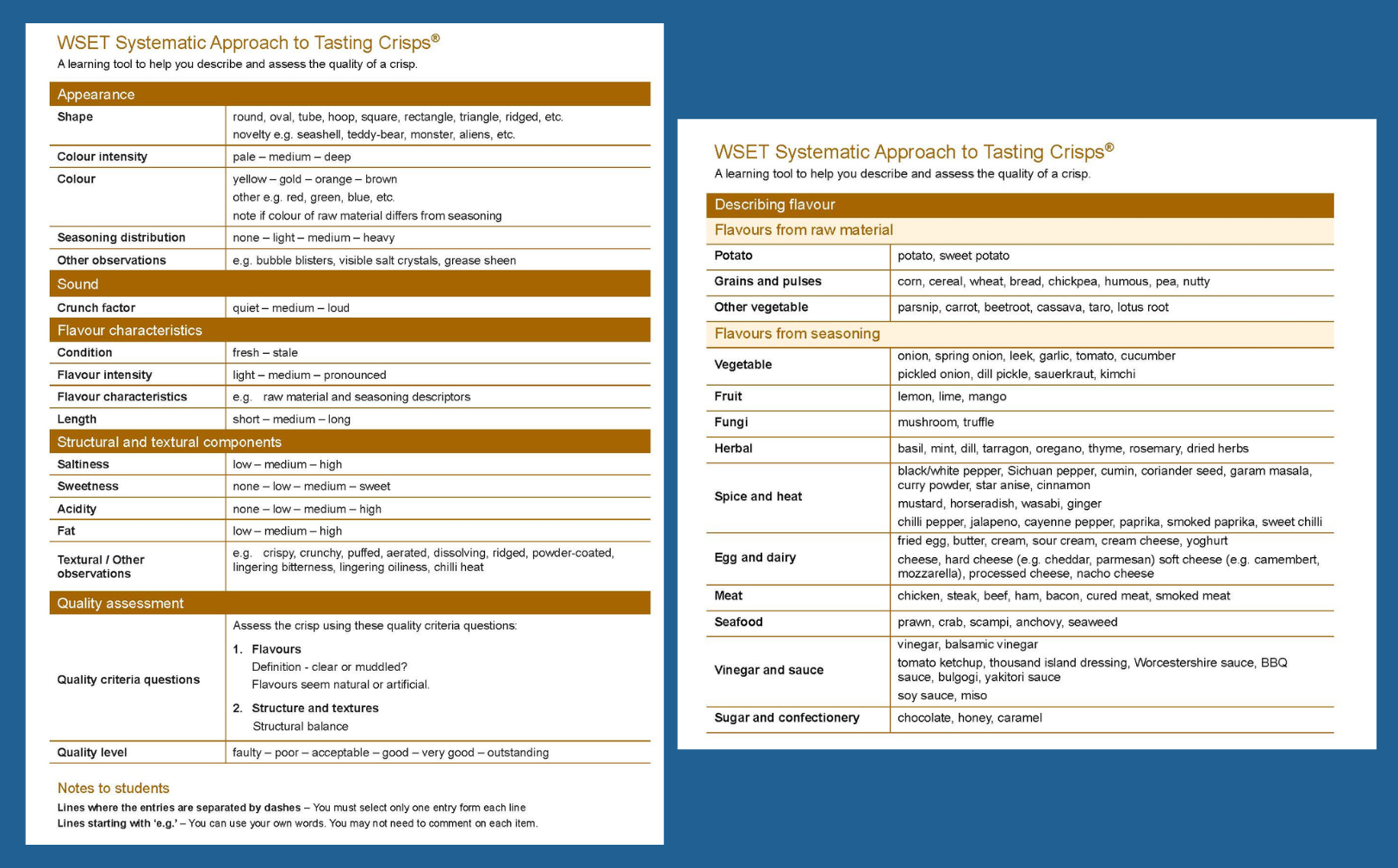
Here’s how it works...
1. Appearance
Crisps vary enormously in shape and colour, and these cues tell you a lot about raw materials, cooking style and seasoning.
- Shape: round, oval, hoops, squares, ridged, tubes, even novelty shapes like monsters or seashells.
- Colour: from pale yellow and gold to deep orange or brown - or more unusual hues depending on vegetable type or added flavour powders.
- Seasoning distribution: is it lightly dusted or heavily coated?
- Other details: bubble blisters, visible salt crystals, a glossy oil sheen - all offer insight into texture and frying method.
2. Sound
Sound is part of the sensory experience.
Does it crunch quietly, with a gentle snap - or loudly, like a brittle shard?
This gives early clues about thickness, cooking technique and freshness.
3. Flavour
Condition
Is the crisp fresh and lively, or slightly stale?
Intensity
Are flavours light, medium or pronounced?
Flavour Characteristics
Crisps offer complex layers - from the base ingredient to added seasonings.
- Raw materials: potato, corn, wheat, chickpea, cassava, beetroot and more.
- Vegetable notes: onion, garlic, tomato, pickled onion, kimchi.
- Fruit notes: lemon, lime, mango.
- Herbal tones: basil, dill, oregano, rosemary.
- Spice & heat: cumin, curry powder, wasabi, jalapeño, paprika, Szechuan pepper.
- Dairy & egg: sour cream, cream cheese, mozzarella, cheddar, butter.
- Meaty richness: chicken, bacon, cured meats.
- Seafood: prawn, crab, scampi, seaweed.
- Sauces & umami: vinegar, soy, miso, BBQ, Worcestershire.
- Sweet elements: chocolate, caramel, honey.
Length
How long do the flavours linger? Short, medium or long?
4. Structure & Texture
These components are key when matching crisps to beers:
- Saltiness: low, medium or high
- Sweetness: none to sweet
- Acidity: none to high
- Fat: low to high
- Texture: crispy, crunchy, puffed, dissolving, ridged, aerated
- Other sensations: chilli heat, lingering bitterness or oiliness
These elements interact beautifully with beer - salt amplifies malt sweetness; fat softens bitterness; acidity lifts richer beer styles.
5. Quality Assessment: what makes a crisp “good”?
The SAT encourages tasters to evaluate:
- Flavour clarity: are flavours distinct or muddled?
- Natural vs artificial character
- Structural balance: does salt, fat, sweetness and acidity feel harmonious?
Crisps can then be rated on a scale from faulty → outstanding, reflecting both craftsmanship and overall enjoyment.
How beer and food interact
Pairing food and drink is all about how flavours meet. Here’s some examples of how different elements in food impact the flavour or perception of beer on the palate.
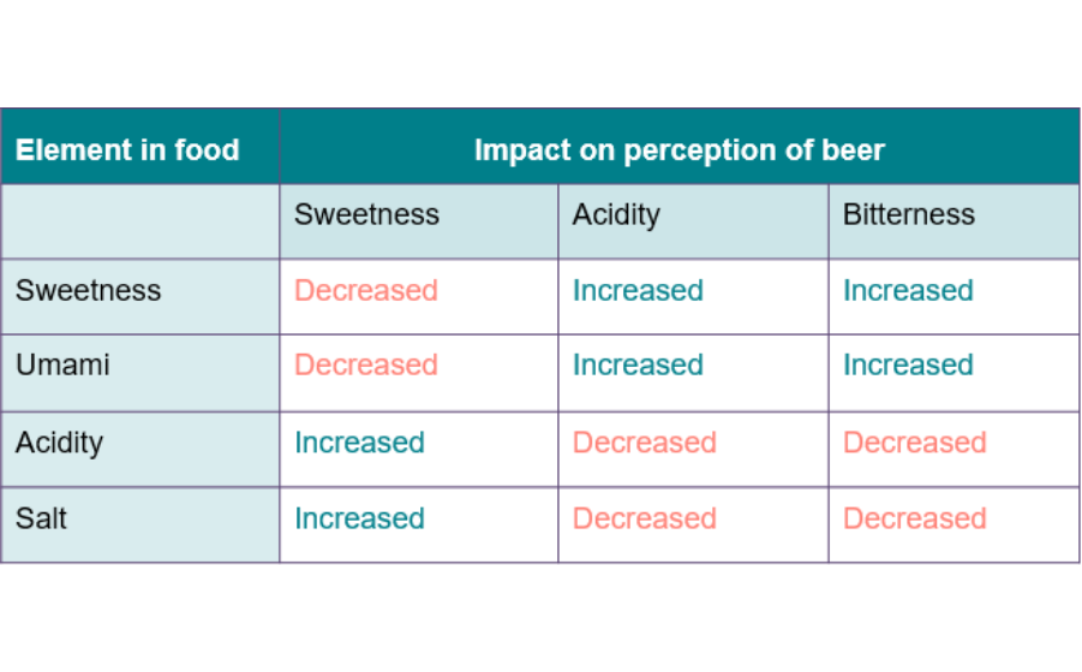
It’s also worth noting that:
- Chilli heat intensifies alcohol perception in beer
- Bitterness in food amplifies beer bitterness perception in beer
Understanding how beer and food profiles interact is key when considering the perfect snack to pair with your favourite tipple.
Why beer and crisps work so well
Texture
Crisps are firm, crunchy and fatty - a perfect contrast to beer’s carbonation and bitterness.
Saltiness
Salt is a flavour amplifier. It lifts malt sweetness and sharpens hop bitterness. And most crisps will have some presence of salt!
Versatility
As we’ve seen, both beer and crisps can be made in multiple different ways to offer different textures and flavour profiles for us to enjoy.
With thousands of beer styles and endless crisp flavours, the combinations are nearly limitless – which makes them great fun to try pairing!
Some of our unique beer & crisp pairings
Pilsner × Bonilla a La Vista crisps
With roots in 1842 Bohemia, the pilsner is crisp, clean and refreshing. Paired with Bonilla’s olive‑oil‑fried crisps (famed in Galicia and even featured in Parasite), it’s a masterclass in simple, high‑quality ingredients paired well.
Witbier × poppadoms (Mango chutney style)
Witbier - revived by Pierre Célis - is aromatic with orange peel and coriander. Its soft spice and gentle wheat character pair beautifully with subtly sweet, tangy South‑Asian‑style poppadoms.
Mild Ale x Scampi Fries
The British mild: low in bitterness, rich in malt, and full of pub nostalgia. That gentle sweetness calms the garlicky, lemony punch of Smiths Scampi Fries.
Pale Ale x pesto crisps
American hops give tropical energy, while Tartuflanghe Pesto Chips bring basil‑rich Italian brightness. A flavour‑holiday for your tongue.
Flanders Red x pickled onion Monster Munch
A delicious combination where the acidity in the crips pairs well with acidity in the beer.
Baltic Porter x chocolate‑coated corn snacks (Smash!)
Dark, smooth, strong lagers like Põhjala Öö bring deep roasted notes that pair astonishingly well with these sweet yet salty chocolate‑covered crisps.
It’s worth noting that these are a Scandinavian speciality, so perhaps a little hard to come by. Chocolate covered pretzels would also work!
Beer and crisps might make you think of the humble and somewhat casual process of indulging in a snack at your local with mates, but when you look closer it’s actually a pairing journey that makes as much sense as pairing cheese with wine.
Want to learn more about beer? Take a look at our beer qualifications to continue your learning.
