


This article is inspired by a WSET webinar exploring the evolution of American beer with journalist and author Jeff Alworth. In the session, Alworth looks at how the United States moved from German immigrant brewing traditions to a modern hop-driven culture that has influenced brewers around the world.
You can watch the full webinar recording via the WSET YouTube channel.
For much of the 20th century, Americans themselves often claimed they had no real beer culture. The country was associated with light, industrial lagers from huge breweries and beers designed more for refreshment than for character. But that’s steadily changing.
Read on to learn more about the evolution of American beer.
Why national brewing traditions matter
Spend time visiting breweries across countries like Belgium, Germany or the UK and patterns quickly emerge. Breweries within a country often share the same technical approaches, ingredients, equipment and philosophical outlook. The beers may differ in style, but they still feel unmistakably part of the same brewing culture.
Even when the style name is similar, the results can be very different. A pale ale brewed in Britain looks and behaves differently from one in Belgium or Germany. In fact, a German Kölsch has more in common with German pilsner than with Belgian pale ale, despite the shared idea of a “pale ale”.
These similarities are not accidents. Brewing traditions are shaped by a web of influences: the ingredients available locally, the brewing methods passed down through generations, the legal frameworks that define what beer can be and the economic pressures that shape production.
American beer eventually developed its own tradition. But the story begins somewhere else.
The German roots of American brewing
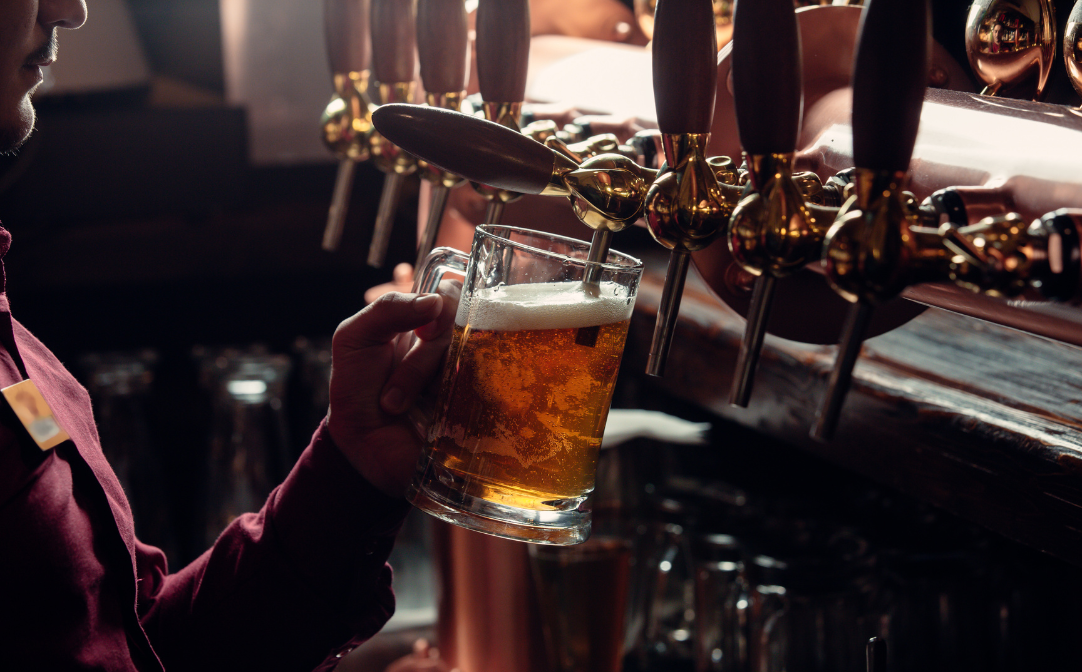
The foundation of American beer culture arrived in the mid-19th century with waves of German immigration. These brewers brought with them the techniques and preferences of Central Europe, particularly the relatively new and rapidly spreading technology of lager brewing.
Before their arrival, beer in the United States was often ale, brewed in a looser British tradition. German immigrants introduced colder fermentation, lager yeast and the crisp, pale beers that were transforming brewing in Europe.
Cities across the country soon developed strong brewing centres. Breweries sprang up in places where German communities settled, and lager rapidly became the dominant style of beer in America.
For decades, American brewing looked very much like a transplanted version of the German model. But the country itself would push the beer in a different direction.
Industrialisation and the rise of US national brands
As the United States industrialised in the late 19th and early 20th centuries, brewing changed with it. Scale increased. Distribution expanded. And advancements in technology allowed breweries to reach markets far beyond their original cities.
Beer became a national product rather than a local one.
Large breweries refined lager into a highly consistent, extremely drinkable beverage that could be produced in vast quantities. Adjunct grains such as rice and maize were incorporated, helping create the lighter-bodied beers that eventually defined the American mainstream.
A series of external forces reinforced this shift. Packaging innovations such as the tin can helped beer travel further and last longer. National advertising reshaped the relationship between drinkers and breweries.
But no single event shaped American beer more dramatically than Prohibition.
The impact of prohibition
When the United States banned alcohol production in 1920, the brewing industry collapsed almost overnight. Thousands of breweries disappeared. Those that survived often did so by producing soft drinks, ice cream or other products.
When Prohibition ended in 1933, the industry that returned was far smaller and far more consolidated.
A handful of large breweries emerged with the scale and distribution networks needed to rebuild the market. Over time, companies such as Schlitz, Miller and Coors came to dominate the American landscape.
The beer they produced was not intended to be provocative or distinctive. It was designed to appeal to the broadest possible audience. Clean, crisp and highly drinkable, these lagers became symbols of modern American industry.
For decades, this was the beer most Americans knew.
How craft brewing changed everything for America
In the late 20th century something remarkable began to happen. Small breweries started opening across the country, often founded by people inspired by European beer traditions or by a desire to make something more flavourful than the mainstream lagers available at the time.
The movement gathered momentum in the 1980s and 1990s.
What made American craft brewing different was not just the scale of the breweries, but the mindset behind them. Rather than replicating established European traditions, many brewers treated beer as a space for exploration.
Experimentation became a defining feature of American brewing culture.
Brewers revisited historical styles, borrowed techniques from around the world and began pushing ingredients in bold new directions. They discovered that American-grown hops had extraordinary aromatic potential.
The hop-forward revolution
The modern identity of American beer is inseparable from hops.
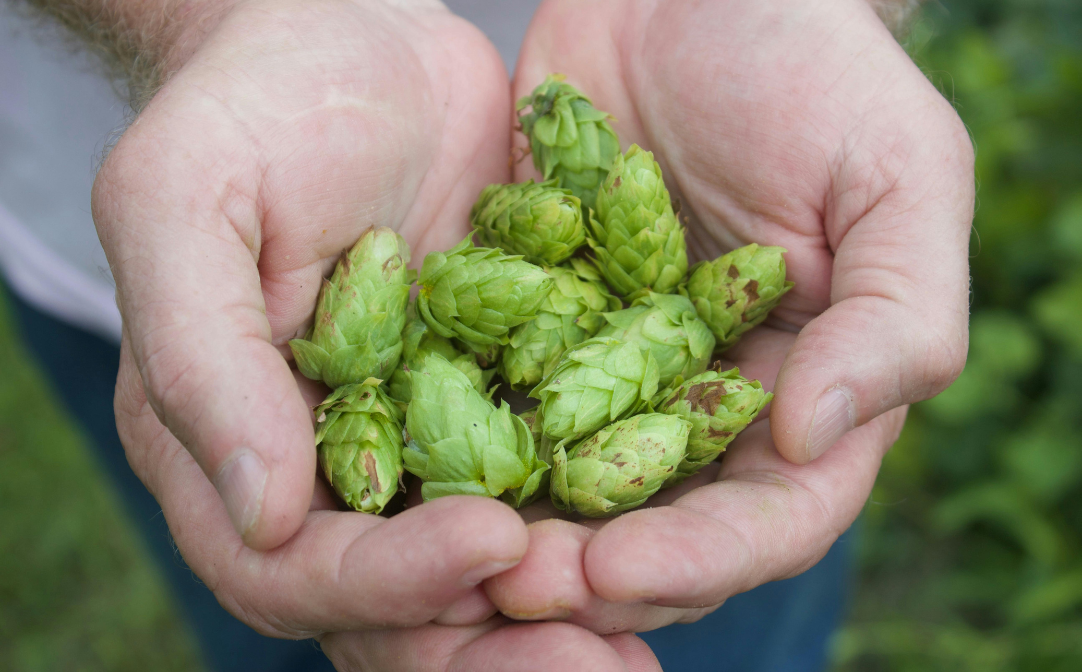
New hop varieties developed in the United States produced vivid flavours rarely seen in traditional European brewing. Citrus, tropical fruit, pine and resin began appearing in beers with unprecedented intensity.
Brewers leaned into the expressive power of American hops, gradually increasing both bitterness and aroma. As the movement evolved the focus shifted even more toward aroma, producing the lush, fruit-forward IPAs that now define the style.
Varieties such as Citra helped push this transformation further, delivering huge bursts of grapefruit, mango and lime character. The result was a new kind of IPA that felt distinctly American.
These beers didn’t just change the domestic market. They reshaped brewing culture internationally, inspiring brewers from Europe to Asia to rethink how hops could be used.
The emerging brewing tradition of America
It is rare to watch a national brewing tradition emerge in real time. Yet that is exactly what happened in the United States over the past forty years.
What began with German immigrant lager traditions eventually evolved into something entirely new. The American approach blends technical knowledge from Europe with a spirit of experimentation that encourages brewers to challenge expectations.
The result is a culture that values curiosity, innovation and bold flavour. From crisp lagers to intensely aromatic IPAs, American brewers have created a style of brewing that now influences beer drinkers and producers across the globe.
And it all began with a country that once believed it had no beer culture at all.
Learn more about beer with WSET
Beer professional or enthusiast looking to expand your knowledge of beer?
Expand your learning with a Level 1 Award in Beer or Level 2 Award in Beer from WSET.
