


Not all stouts are created equal.
While they share their dark colour and roasted flavours, the difference between an Irish stout and an imperial stout can be striking - from lower-alcohol, more balanced styles to richer, fuller-bodied and more intense, warming expressions.
In its basic form, a stout beer is a type of ale that is dark brown to black in colour, brewed with dark roasted malts or grains, giving aromas such as coffee, chocolate or burnt bread. Stouts sit close to porters in terms of their style.
In this article, we explore the main stout styles, with a closer look at Irish stout and imperial stout, and how they compare. We’ll also touch on porter, a closely related style, to help place stout in its wider family.
Types of stout explained
Irish stout
As the name implies, Irish stout is originally from Ireland and is famously brewed in Dublin, where carbonate-rich water is well suited to brewing with dark roasted malts and grains.
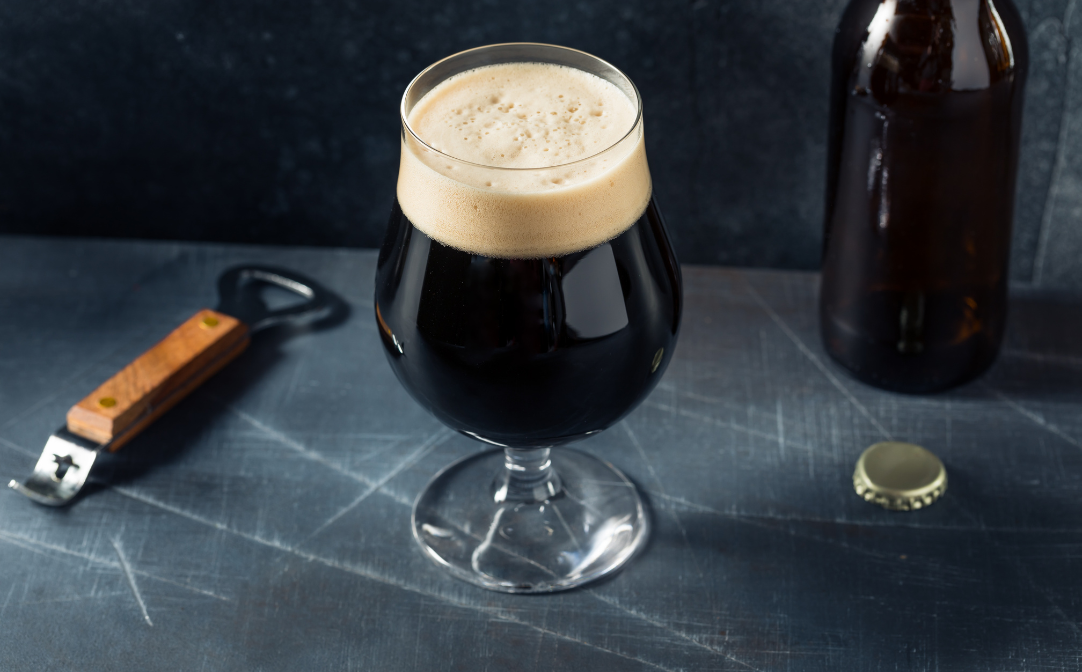
Irish stout is brown to black in colour, clear or opaque and offers burnt and roasted aromas such as coffee, cocoa, dark chocolate or burnt bread from the use of dark roasted malt or, often, roasted barley.
There is sometimes subtle fruity character from yeast, and subtle floral hop-derived aromas. The level of hop bitterness varies and is accentuated by the bitterness from roasted grains giving medium to high bitterness overall.
Irish stout typically has low to medium alcohol. It is often nitrogenated, giving a notable creamy foam when the beer is poured.
Imperial stout
Imperial stout (sometimes called Russian imperial stout) is typically black in colour and opaque.
Compared to Irish stout, imperial stout is fuller-bodied, higher in alcohol and more intense in both aroma and flavour. It typically has high to very high alcohol (often exceeding 8%), which can give a warming sensation.
It is full-bodied with medium to high bitterness, low to medium sweetness and pronounced aroma intensity. It also typically has low to medium carbonation.
As would be expected from this style, it has dark roasted malt aromas such as coffee or dark chocolate. Caramel malt is sometimes used to add notes such as caramel or dried fruit. When aged, this style can develop port-like notes.
British-style imperial stout can have subtle herbal, earthy or fruity notes from traditional British hops, while American-style imperial stout tends to have citrus, stone, tropical fruit, pine or resin notes from American hops, and can have more prominent dark roasted malt notes such as burnt bread.
In simple terms, Irish stout is typically lighter, drier and more sessionable, while imperial stout is stronger, fuller and more intense.
Other stouts
Oatmeal stout
As the name suggests, these stouts are brewed with a proportion of oats in the grist (the mix of grains used in brewing). The inclusion of oats contributes to body, giving these beers a medium to full body and a smooth, silky mouthfeel.
American stout
American stout typically combines the roasted flavours of dark malts with more expressive hop character. This can bring aromas such as citrus, stone or tropical fruit, along with pine or resin notes from American hop varieties.
Sweet stout
Historically called milk stout, this style includes lactose, an unfermentable milk sugar, added to the wort (the liquid extracted from the grains during brewing). Because yeast cannot ferment lactose, it remains in the final beer, giving a noticeable sweetness, typically medium to high.
There are also a number of more modern stout styles that have become increasingly popular, including coffee stout, pastry stout and oyster stout, each adding additional ingredients or flavours to build on the base style.
A touch on porter
To fully understand stout, it helps to look at its close relative: porter.
Porter is said to have originated in London, England in the 1700s, pre-dating stout. The carbonate-rich water here was ideal for brewing dark beers, much like the water in Dublin.
Porter is brown to black in colour, clear or opaque and has aromas such as chocolate or coffee from dark roasted malts. It may also have caramel notes if a small amount of caramel malt is used.
So you can see how a porter sits in the same family as a stout!
English-style porter
This style typically has fruity esters from British ale yeast along with a low level of diacetyl (a natural by-product of fermentation that can give buttery or butterscotch notes if present), which is acceptable at low levels.
It typically has low to medium alcohol and bitterness, sometimes with subtle earthy, fruity or herbal aromas from traditional British hops.
American-style porter
This style of porter is generally higher in alcohol than the English style, features a subtle burnt bread note, and as it typically uses American ale yeast it can have a subtle fruity character.
As is often the case with American styles, it typically has more prominent citrus, stone, tropical fruit, pine or resin aroma and bitterness from the use of American hops.
Want to learn more about beer, from brewing to tasting? The WSET beer qualifications are perfect for enthusiasts or professionals wanting to learn more about beer.
Additional reading:
A beginner's guide to beer styles
