


Wine is made in almost every corner of the world, yet some wine cultures remain little known outside their home countries. Ukraine is one of them.
With a history stretching back thousands of years and a modern industry developing under extraordinary circumstances, Ukrainian wine is beginning to attract greater international attention.
In this guest article, Ukrainian wine communicator Natalia Pasichnyk explores the country’s winemaking past, the challenges it has faced, and the producers shaping its future.
For many, wine from Ukraine still feels like a discovery. Yet this European country has more than 2,800 years of winemaking history. A past that Soviet propaganda tried to erase is finally becoming visible, carried forward by winemakers pushing the boundaries of what is possible, even in the midst of war.
Wine was made here before the Greeks
Until recently, the history of Ukrainian wine was little known not only to the world, but even to Ukrainians themselves. Soviet propaganda suppressed any mention that local communities had a long-standing culture of winemaking.
Contrary to the widespread belief that wine was brought to the territory of modern Ukraine by the Greeks in the 7th–6th centuries BC, archaeological discoveries show that cultivated grapes were known here even earlier.
By the second half of the 7th century BC, Scythians in the western part of the country (in today’s Ternopil region) were using bronze strainers to filter wine. Further west in Zakarpattia, Celtic excavations uncovered iron knives used for pruning vines.
After the fall of the ancient civilisations, monasteries became centres of wine consumption and study. Between the 7th and 10th centuries, wine was actively traded in amphorae and leather wineskins in the eastern regions of Ukraine (around present-day Kharkiv).
From the Middle Ages to the early 20th century, Ukrainian winemaking evolved from monastery gardens and princely cellars to international recognition.
Cossack leaders, the hetmans Ivan Mazepa and Kyrylo Rozumovsky, actively developed their own vineyards and wine collections. And it was not exclusively a male domain. Nineteenth-century documents frequently mention women winemakers who owned estates on the Crimean Peninsula.
At the Paris Expo in 1900, a Riesling from the Kherson region produced by the Prince Trubetskoi winery won the Grand Prix. This winery would operate for more than 120 years, before being occupied, looted and ultimately destroyed by Russian troops during the invasion of Ukraine in 2022.
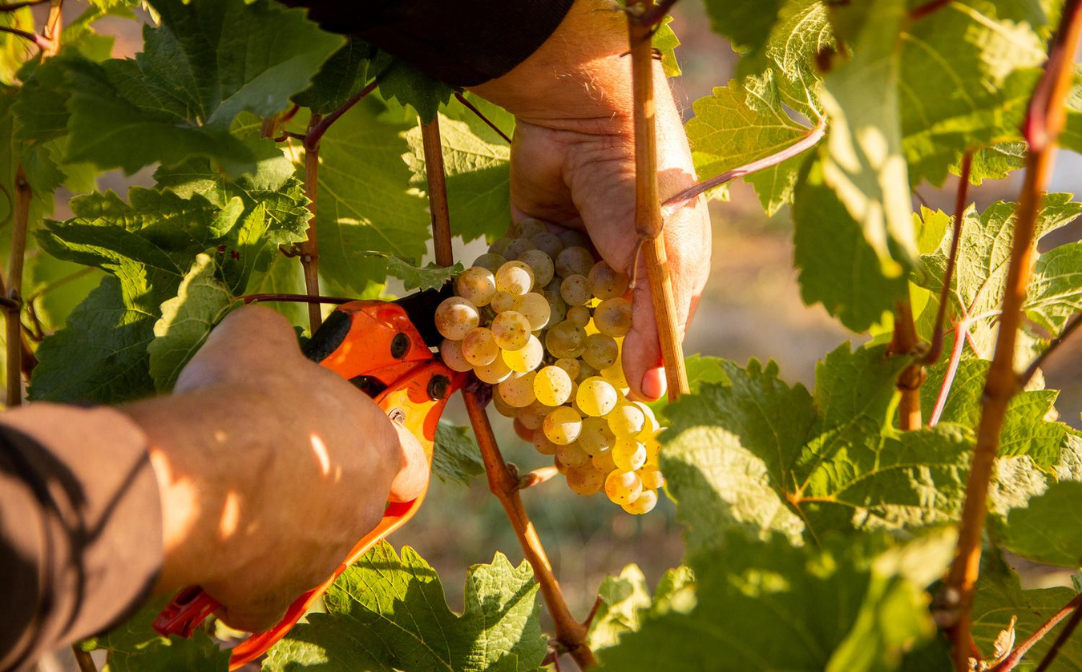
Muscaris harvesting in the Demidi vineyards, Kyiv region. Credit: Demidi
The impact of the Soviet era on Ukrainian vineyards
The following era of wars and dictatorships had a devastating impact on winemaking. In 1921, all wine stocks and wineries in Ukraine were declared state property. The introduction of a "tax on trees and shrubs" forced many peasants to cut down their own vineyards.
Ukraine became the main supplier of wine to the Soviet Union, but industrial policy focused on quantity rather than quality. To mask defects in wine that deteriorated during transportation, sugar and alcohol were often added. As a result, 96% of production is said to have consisted of low quality wines.
The Soviet anti-alcohol campaign of 1985 nearly destroyed the industry. Vast numbers of vines were uprooted across Ukraine. Scientists lost the ability to conduct research and preserve unique varieties. Dr Pavlo Holodryha, the creator of more than 40 grape varieties, was unable to bear the destruction of his life’s work and took his own life.
While vineyards were being destroyed inside the country, Ukrainian scientific expertise received the highest international recognition: in 1988, Dr Mykola Pavlenko was elected President of the International Organisation of Vine and Wine (OIV).
How Ukrainians began reclaiming history
After Ukraine gained independence in 1991, development was initially slowed by outdated legislation. Trust in local wines began to grow as the gaps in the country’s wine history gradually started to be filled.
The official Soviet narrative claimed that Ukrainians had no tradition of winemaking. Modern research disproves this myth, including the book 29 Centuries: Rediscovered History of Wine in Ukraine by Anna Eugenia Yanchenko, which received an OIV award in 2024.
“Alongside introducing the world to the history of Ukrainian wine, I had another mission,” Yanchenko says. “People now often tell me: ‘Our great-grandmother said wine was made in our area, but no one believed her. Then we went to the archives, and it turned out to be true.’ People are starting to research and reclaim their past.” Yanchenko analysed more than 800 historical sources while working on the book.
Winemaking in wartime
A turning point came in 2018 with the abolition of costly licenses for small producers and the adoption of laws supporting terroir wines. The number of wineries increased significantly, and the process of registering Geographical Indications (GIs) began.
But in 2022, Russia launched its full-scale invasion. This followed the 2014 annexation of Crimea, a key region that once accounted for nearly a third of Ukraine’s vineyards.
The industry continued to operate under wartime conditions. Growers carried out winter pruning literally under the flight paths of missiles and drones. Wineries in the Kherson region were occupied and looted, hundreds of hectares of vineyards were mined, and wine, glass and production factories were destroyed, along with the country’s largest wine storage complex, covering around 100,000 square metres.
Many winemakers and sommeliers joined the front lines. Wine cellars were used as civilian bomb shelters. Wineries in Zakarpattia hosted tens of thousands of displaced people and colleagues from affected regions.
The war is now in its fifth year, and the challenges have become a daily reality. Producers like Beykush in the Mykolaiv region continue to operate just a few kilometres from the front line. Across the country, the industry contends with persistent shelling, strikes on energy infrastructure, blackouts, and the logistical hurdle of military checkpoints.
Despite these severe conditions, the work has never stopped. In 2022, Ukrainian wines gained a permanent place at La Cité du Vin in Bordeaux and achieved gold at the Decanter World Wine Awards. Today, the sector continues to grow, with new small-scale wineries opening and Ukrainian bottles reaching more international markets than ever before.
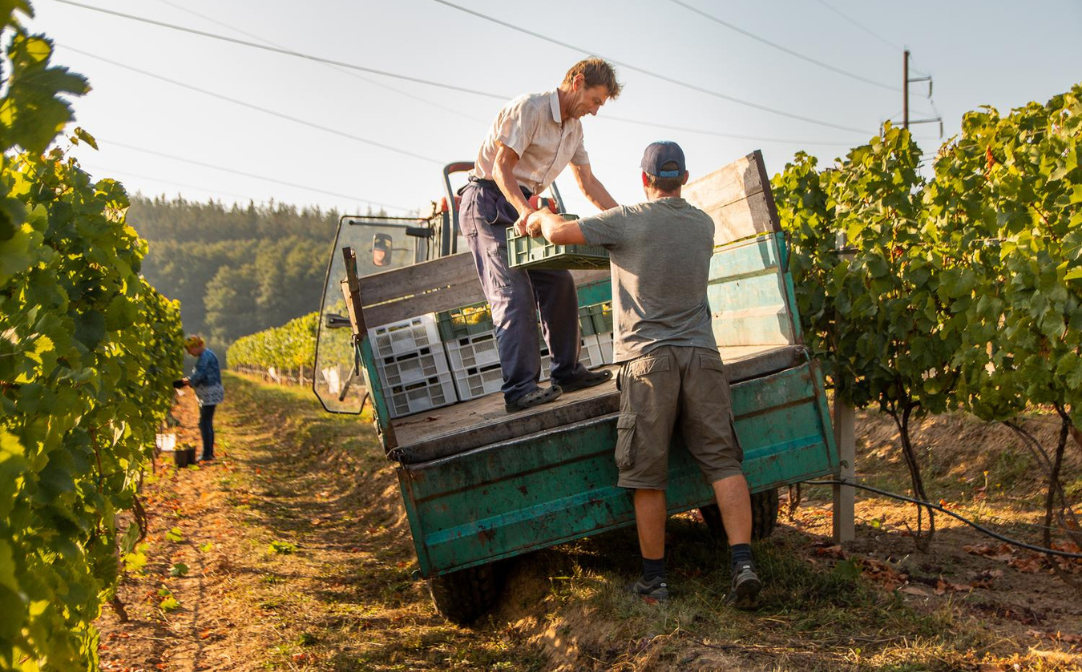
Muscaris harvesting in the Demidi vineyards, Kyiv region. Credit: Demidi
Regional diversity and key grape varieties in Ukraine
Ukraine is the largest country in Europe by area, with approximately 15,000 hectares of vineyards (excluding temporarily occupied territories). The climate is largely continental, moderated in the west by the Carpathian Mountains and influenced by the Black Sea in the south and by numerous rivers and lakes across the country.
A wide range of microclimates, landscapes and soils, including clay, loam, limestone, and the famous humus-rich chornozem, allows for diverse cultivation.
In the largest southern winegrowing zone near the Black Sea, common plantings include Aligoté, Cabernet Sauvignon, Saperavi and Rkatsiteli. This is also where the Piedmontese variety Timorasso produced its first successful harvest outside Europe.
In the west, around the Carpathian Mountains, vineyards on volcanic soils are planted with Pinot varieties, Zweigelt, Traminer, Furmint, Leánka and Bakator. In the northern regions, producers work with Riesling, Cabernet Franc and PIWI varieties. Chardonnay, Merlot and Sauvignon Blanc are grown in many parts of the country.
Muscat varieties are also showing promising results, particularly Muscat Ottonel, which won a Platinum medal at the Decanter World Wine Awards in 2023 for a wine produced by the Shabo winery in the Odesa region.
Unfortunately, many indigenous varieties were lost in the 1980s. Among the survivors, Telti-Kuruk is the most notable. Known since the 16th century, it grows on the sandy soils of southern Ukraine; some ungrafted vines are around 50 years old. The wine has pronounced acidity and excellent ageing potential. Aromas include flowers, peach, lemongrass and feijoa, while late-harvest versions show more notes of honey and quince.
Other highlights include Odesa Black (a Cabernet Sauvignon × Alicante Bouschet cross), which produces structured wines with powerful tannins and notes of black berries, chocolate and liquorice. In the 20th century it was mostly used in blends for colour due to its high anthocyanin content. With careful handling, however, the grape reveals strong potential and a distinctive character.
Another crossing, Sukholymanskyi (Chardonnay × Plavai), is floral and fresh in style. It performs excellently in skin-contact wines.
The frost-resistant Citron Magaracha, created in the 1970s by Pavlo Holodryha, offers a round palate with orange, lime and tropical fruit notes.
Climate change and sustainable trends
Over the past 30 years, Ukraine’s average temperature has risen by 1.5°C. In the south, grapes now accumulate sugar earlier, sometimes shifting harvest dates by 40–45 days. Conversely, this shift has enabled viticulture to expand into northern and central regions, such as Kyiv and Zhytomyr, where many new wineries have opened.
Many producers are focusing on PIWI varieties to support sustainable viticulture with reduced pesticide use. While European hybrids like Muscaris, Souvignier Gris, Jupiter, and Solaris are successfully cultivated, there is a growing interest in local PIWIs such as Aromatnyi, Zahreii, Iskorka, and Muscat Odeskyi, which show resistance to frost and diseases like oidium and downy mildew.
The focus on resilient varieties contributes to the growth of the natural, organic, and biodynamic sector. However, obtaining certification has become significantly more difficult: because of the war, inspection visits to vineyards and wineries are often impossible.
In the Kyiv region, the Biologist winery maintains a biodynamic vineyard and works with organically certified grapes. Many producers rely on wild yeasts and minimise intervention during winemaking, releasing unfiltered wines and using only small amounts of sulphur dioxide.
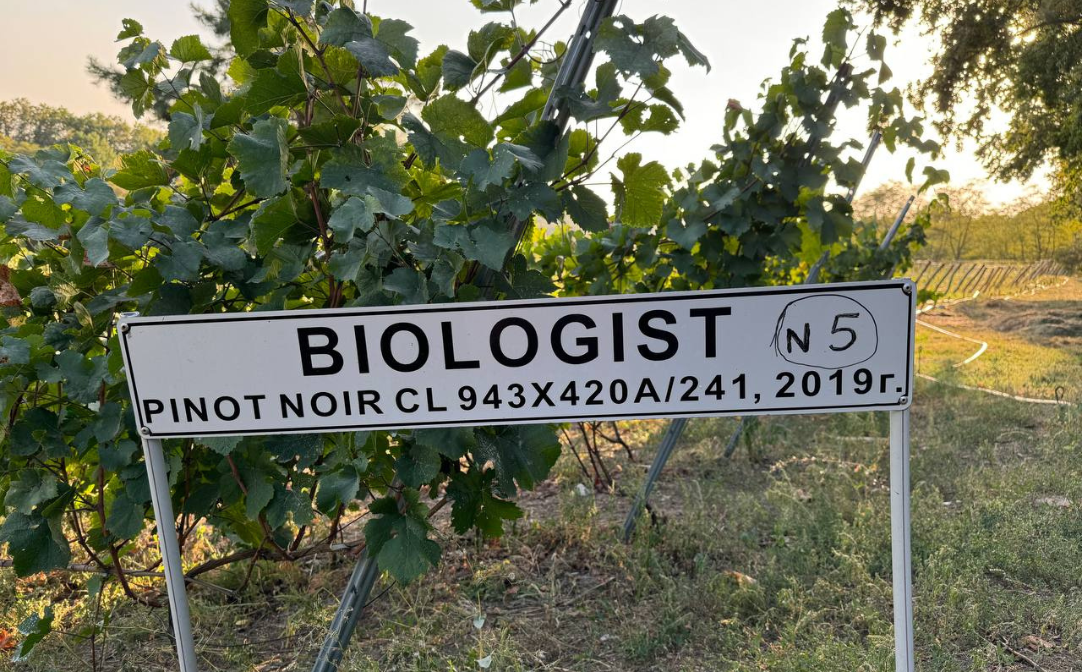
Biologist has organic vineyards in Odesa and biodynamic vineyards in the Kyiv region
Winemakers are also developing their own approaches to local grape varieties. At the Demidi winery in the Kyiv region, the flagship wine is crafted from the PIWI variety Krasen, using grapes partially dried in a specialised chamber at 28–30°C to achieve the desired concentration of aroma and flavour.
In Zakarpattia, Chateau Chizay is pioneering "zero waste" production with a cosmetics line derived from estate grape-seed oil. This circular project emphasizes total traceability, ensuring every stage — from cultivation to primary processing — occurs within a single, controlled production cycle.
Ageing wines in amphorae, qvevri and concrete eggs has become widespread. In addition, many producers are using locally made Volyn oak barrels with acacia heads, now successfully exported to France, Italy, Spain and the US.
The no- and low-alcohol segment is also developing: as producer Eduard Horodetskyi notes, de-alcoholized wines now account for about 20% of his total sales.
Modern regulation and future outlook for Ukrainian wine
In 2018, Ukraine ranked among the world’s top twenty wine producers (OIV Statistical Report on World Vitiviniculture 2019). The war reduced export volumes by more than four times, but it also encouraged the industry to seek out new markets. "Today, around 20 wineries export to over 27 countries, with 12 wineries represented in the UK alone," says Svitlana Tsybak, Chairman of the Ukrainian Association of Craft Winemakers.
Despite all the challenges, the industry continues to move forward. Over the past few years, around eighty small-scale wineries have opened.
“The new wave of winemaking often started with purchased grapes or leased vineyards,” says Yanchenko. “Now producers aim to own their vineyards and control quality from A to Z. Many are investing heavily in site selection and soil studies.”
Although international wine tourism is currently limited, domestic tourism is growing rapidly. At the Demidi winery alone, more than 700 visitors attended tastings and wine tours in 2025.
The industry is also undergoing internal reform. At the beginning of 2026, a new law came into force, moving the regulatory system away from its post-Soviet model and towards modern European principles focused on traceability and vineyard-level control.
Ukraine is reclaiming its past while confidently shaping its present. What about the future?
“The greatest achievement during the years of war is that, despite everything, we and other producers continue to work and create high-quality wines,” says the team at Demidi.
It is difficult to comprehend how they persevere. Yet perhaps this is the only path possible when the goal is the freedom to craft their own wine on their own land.
The author would like to thank Anna Eugenia Yanchenko and Ukrainian winemakers for their assistance in preparing this article.
About the author
A professional journalist and former Senior Editor at ELLE Ukraine, Natalia Pasichnyk moved into the UK wine trade in 2023. Having earned her WSET Level 3 Award in Wines with Merit, she continues her studies and is currently focusing on her development as a wine communicator.
