


This article is inspired by a recent WSET webinar on Armenian wines led by Arpine Manukyan DipWSET an Armenian winemaker, educator and the first person in the country to achieve the WSET Diploma. The full webinar recording is available to watch on the WSET Global Events Hub on YouTube.
Armenia is not a country that people naturally associate with wine production, and yet there is proof that some of the earliest examples of viticulture began there. Rather than starting with a region or a grape variety, the conversation around Armenian wine begins much earlier...
Armenia as one of the birthplaces of wine
Wine in Armenia is not simply a revival built on old wives' tales and mythology. In fact, archaeology and genetics place the country firmly at the centre of early viticulture.
The Areni-1 cave complex in the Vayots Dzor region, dating to around 4000 BC, revealed a complete winemaking installation: press, fermentation vessels, storage jars and drinking cups. This was organised, intentional winemaking, not accident or improvisation. This site in South-East Armenia remains the oldest known winery discovered to date.
Further evidence of Armenian viticulture heritage comes from the Karmir Blur archaeological site near Yerevan, dating to around 650 BC, where grape seeds and hundreds of large clay amphorae were found. Many were inscribed with volumes and production years, pointing to large-scale, structured wine production. These vessels, still used today, are often buried halfway into the ground to naturally regulate temperature.
Modern genetic research reinforces this picture. A major study published in Science in 2023 concluded that grapevines were first domesticated around 11,000 years ago in two main regions: the Levant and the South Caucasus, which includes modern-day Armenia.
Caucasian grapevines were selected early for winemaking, while western Asian vines were initially domesticated as table grapes before later crossing with wild vines to produce wine grapes that spread into Europe.
So when we talk about Armenian wine today, we have scientific backing as well as cultural memory.
A history shaped by disruption
Despite these ancient roots, Armenian wine history has not followed a smooth, uninterrupted path. There were no centuries-long systems of appellations, no continuous ownership of vineyard plots, no stable commercial wine structures passed down intact through generations.
Instead, viticulture was shaped by invasions, shifting empires, the Soviet period and the collapse of centrally planned agriculture. Large-scale production waxed and waned.
What endured was something quieter but no less important. Indigenous grape material survived, largely because most regions were untouched by phylloxera. Traditional knowledge persisted, including the use of karas, Armenia’s clay vessels. And wine never disappeared from daily life. It remained part of rituals, hospitality, food, art and literature, even when commercial production declined.
Modern Armenian wine is best understood as a re-emergence. Not a straight historical line, but a return grounded in resilience and rediscovery.
A mountainous country defined by altitude
Geographically, Armenia sits at the crossroads of Europe and Asia in the South Caucasus, bordered by Turkey, Georgia, Azerbaijan and Iran. Its latitude sits between 38 and 42 degrees north, comparable to southern Italy or parts of Spain.
What truly defines Armenia, however, is altitude.
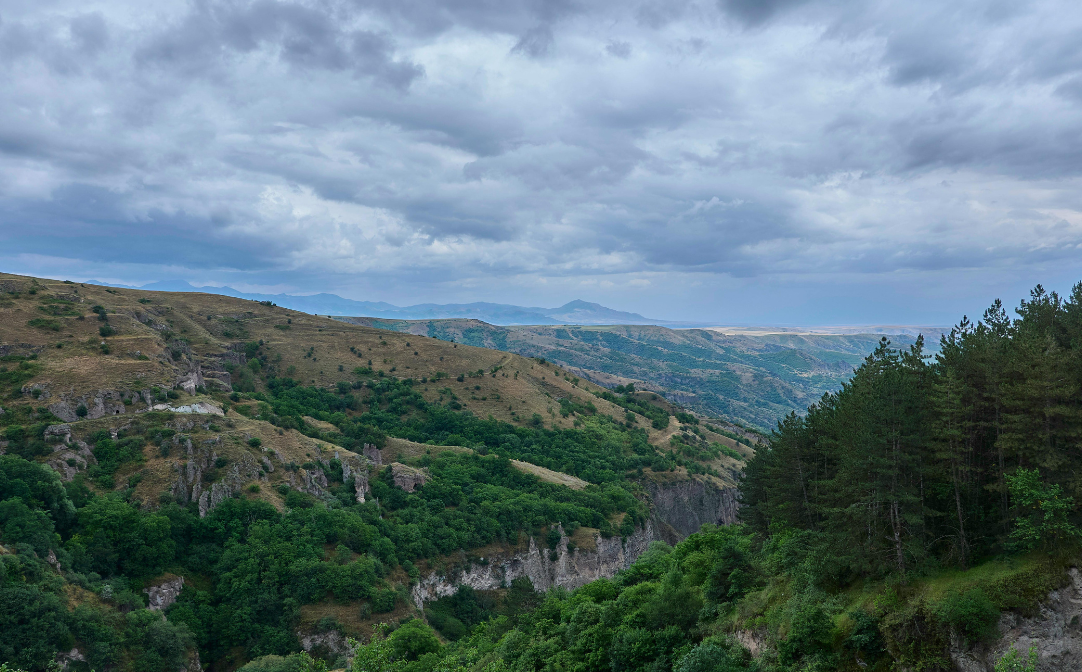
More than 90 percent of the country lies above 1,000 metres above sea level, making it one of the most mountainous wine-producing countries in the world. Vineyards often sit between 1,200 and 1,600 metres, with some reaching as high as 1,800 metres and beyond.
Total vineyard area is small, around 15,000 hectares, comparable to regions such as Alsace or Switzerland. Wine production is concentrated across five main regions, including Vayots Dzor, Ararat, Armavir, Aragatsotn and Tavush.
Why Armenian wines taste the way they do
Several structural factors come together to shape Armenian wine styles.
High altitude brings cooler nights, slower ripening and naturally higher acidity, even in a continental climate with very warm summers. Soils are diverse but often volcanic, frequently combined with limestone. They tend to be poor and well-drained, encouraging low yields and concentration.
Indigenous grape material is central. Armenia is home to around 450 native grape varieties, though only about 30 are used commercially today. Many vineyards remain ungrafted, and some vines are over a century old. This combination of biodiversity, old vine material and native genetics is a major focus of contemporary winemaking.
Traditional vessels still matter. Karas, large clay vessels which we touch on later, are not a historical curiosity but an active stylistic choice for some producers, valued for texture, purity and expression rather than overt oak influence.
Local oak also plays a role. Caucasian oak, quercus macranthera, is slow-growing, drought-tolerant and naturally suited to high altitudes. It tends to give firmer tannins and dried fruit and herbal notes, flavours familiar from Armenian brandy as well as wine.
Together, these elements give Armenian wines a distinctive profile. Freshness, tension and textural depth are recurring themes.
Climate extremes and natural balance
Armenia has a highland continental climate. Summers are hot and dry. Winters can be severe, with vines often needing to be covered to prevent frost damage.
There are more than 300 days of sunshine each year, supporting full phenolic ripeness even at high altitude. Rainfall is relatively low, typically between 200 and 600 millimetres annually, so irrigation is often necessary, particularly in regions such as Ararat and Armavir.
Perhaps most important is the diurnal temperature range. Warm days allow sugars and flavours to develop, while cool nights preserve acidity and aromatic precision. This contrast underpins much of the balance found in Armenian wines.
Indigenous grapes
Grape diversity is one of Armenia’s greatest strengths.
Areni Noir is the country’s most important red variety, native to Vayots Dzor. It is mid-budding, mid to late ripening, naturally resistant to frost, drought and disease, and well suited to Armenia’s climate. The wines are often pale and transparent in colour, with fine tannins, medium to high acidity and aromas of cherry, violet and peppery spice. The variety is versatile, used for everything from sparkling wines to oak-aged and reserve styles.
Voskehat, whose name translates as “golden berry”, is one of the leading white varieties. Originating in Aragatsotn, it ripens late and can accumulate sugar quickly, requiring careful vineyard management. Styles range from fresh and unoaked to skin-contact wines. Typical aromas include stone fruit, pear, melon and floral notes, with texture and ageing potential playing an increasingly important role.
These varieties underpin Armenia’s modern wine identity, linking historic vineyards with contemporary production.
Karas and a living tradition
Karas, known in other countries as qvevri or amphorae, hold a special place in Armenian culture. Traditionally used not only for wine but also for food storage, they are egg-shaped vessels with a narrow opening and pointed base.
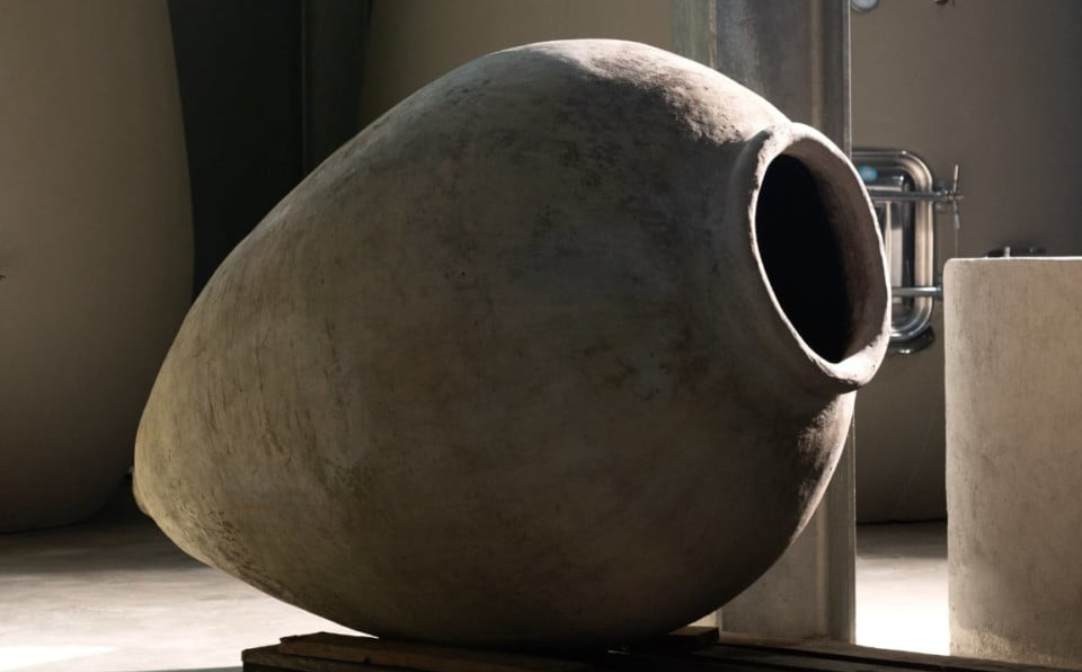 Image credit: Zorah wines
Their design supports gentle circulation of the wine, allows lees to settle naturally, and moderates oxygen exchange. Many are partially buried underground, creating small temperature differences that encourage natural internal movement while allowing easy inspection during fermentation.
The craft of karas making is at risk due to the specialist knowledge and expertise needed to craft them having faded out over the years, but several producers are actively working to revive and adapt it for modern winemaking. It is not universal, but where used, it is a deliberate choice to prioritise texture and varietal expression over overt oak character.
The rise of the Vayots Dzor region
Among Armenia’s wine regions, Vayots Dzor stands out as the most distinctive.
Vineyards here sit between 1,200 and 1,600 metres, with some reaching 1,800 metres. The diurnal range can reach 15 to 20 degrees, supporting freshness and aromatic clarity. Volcanic soils with limestone influence are poor and well-drained, ideal for low-yielding, concentrated fruit.
Alongside Areni, the region is home to other indigenous grapes such as Tozot, known for pale colour, high acidity and juicy red fruit, and whites including Voskehat and Khatuni. The resulting wines combine precision with a strong sense of place.
A modern revival driven by quality
The modern Armenian wine revival began in the early 2000s, driven by diaspora investment, international expertise and a focus on boutique, quality-oriented production.
The number of wineries has grown from around 10 in 2010 to roughly 180 today. Wine production increased by more than 50 percent between 2015 and 2024. Domestic consumption has risen alongside a growing wine culture, supported by specialist wine bars and greater local engagement.
International figures have collaborated with Armenian producers, not to replace tradition, but to help interpret indigenous varieties and high-altitude sites through a modern quality lens.
Institutional support has also been key. The Wine and Vine Foundation of Armenia plays a central role in sector development, quality standards and international promotion. Hosting major international competitions has further raised the country’s profile.
However, Armenian wines tend to sit in the mid to high price range. Small production volumes, manual labour in mountainous vineyards, imported equipment and high transport costs all add up.
As a result, Armenian wines are best suited to niche markets, specialist merchants and on-trade venues that value authenticity, origin and indigenous varieties over volume.
Exports remain closely linked to diaspora communities, though producers are increasingly diversifying into new markets across Europe and Asia. Investment in viticulture has risen sharply in recent years, reflecting growing confidence in Armenia’s long-term potential.
A small country with a clear voice
Armenia today brings together ancient origins supported by archaeology and genetics, extreme high-altitude terroirs, indigenous grape varieties and a modern revival focused on quality rather than quantity.
It is a small country with a distinctive voice. One shaped by altitude, resilience and a deep-rooted relationship with wine that never truly disappeared.
Additional reading and watching
Belgium: small country, big beer country
From ancient vines to modern wines in Ribera del Duero
Introduction to Armenian wines (webinar)
