


Inspired by a recent WSET webinar led by Carolina Martínez Origone, this article explores one of Spain’s most distinctive wine regions. You can watch the full session on the WSET Global Events Hub to dive deeper into the region’s wines, landscapes and evolving identity.
Jumilla does not ease you in gently. With its high altitudes, intense heat and arid conditions, it is a region where vines are pushed to their limits, yet still produce wines that balance ripeness with freshness. Here we look more closely at the region and the Monastrell grape that sits at the heart of Jumilla wine production.
An inland wine region in southern Spain
Jumilla sits inland in south-eastern Spain, around 100 kilometres from the Mediterranean. While this is typical of many Spanish wine regions, its inland position and elevation play a key role in shaping how grapes ripen and how the wines are structured.
Vineyards stretch across a plateau that rises from 350 to 1,000 metres above sea level, with most planted well above 600 metres. This elevation brings a crucial counterbalance to the region’s intense sunshine and low rainfall. Days are hot, often brutally so. Nights, however, cool down enough to preserve acidity and slow the pace of ripening.
In many wine regions, south-facing slopes are prized for maximising sunlight. Here, the logic flips. North-facing sites and shaded vineyards become invaluable, reducing solar exposure and allowing grapes to ripen more gradually. It is a small shift in orientation, but it has a profound effect on balance in the final wine.
The result is a style that holds onto freshness without sacrificing ripeness. It’s a balance shaped as much by site and altitude as by climate.
Soils that store what little rain arrives
Rainfall in Jumilla rarely reaches 300mm per year. Survival here depends as much on what lies beneath the vines as what happens above them.
The region’s soils are geologically diverse, but they share a common thread: limestone. Calcareous soils dominate, appearing as gravelly slopes, sandy loams and deeper valley floors, all derived from limestone parent material. These structures allow roots to travel far below the surface, accessing both moisture and nutrients in a landscape where neither is abundant.
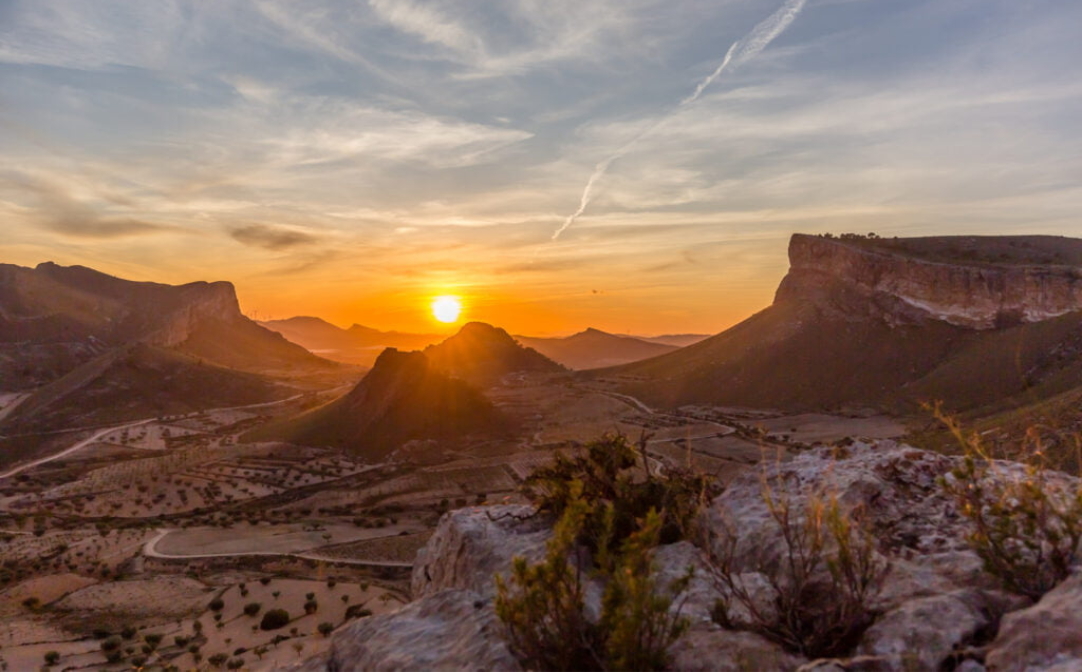
Photo: Jumilla DPO
Many vineyards also contain petrocalcic layers, compacted bands of calcium carbonate that act almost like natural reservoirs. When not too thick, they help retain moisture and keep soils cooler during the hottest periods.
In practical terms, this means that even limited rainfall can be captured and stored, sustaining vines through long, dry summers. It is a quiet but essential part of how Jumilla functions.
Old vines, low yields and a culture of resilience
There is a sense in Jumilla that nothing is rushed. Vines are planted at low densities, spaced widely to avoid competition for water. Most are trained as bush vines, close to the ground, naturally shaded and well adapted to the climate.
Yields are strikingly low, often under three kilos per vine, and far less for older plants. More than 20% of the vineyards are over 30 years old, with a notable proportion of ungrafted vines growing on their own roots. These are rare globally and speak to the region’s long continuity
Viticulture here is also defined by restraint. Dry farming dominates, inputs are minimal and organic certification is widespread. This is not driven by trend, but by necessity. In a place where conditions are already harsh, intervention is kept to a minimum.
The cumulative effect is a vineyard landscape shaped by endurance. Together, these factors are said to result in wines with concentration, structure and a clear expression of site.
Monastrell, the defining grape of Jumilla
Monastrell dominates Jumilla, covering more than 70% of the vineyards and representing around 25% of the world’s plantings. It is central to the region’s identity and wine production.
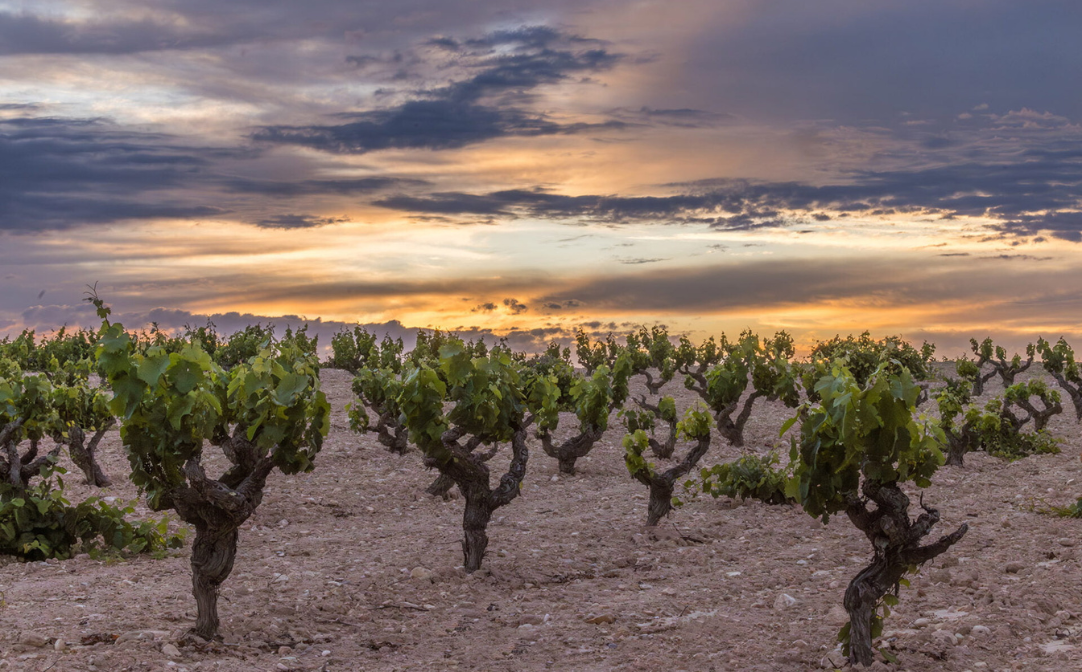
Photo: Jumilla DPO
Yet its identity is changing.
While often associated with dense, powerful or even rustic styles, Monastrell is now showing a much broader range of expressions.
Producers are exploring fresher, more vibrant styles alongside structured, age-worthy wines. Rosés are gaining ground, offering brightness and aromatic lift. Even sweet wines, made from grapes left to over-ripen on the vine and balanced through fortification, show a surprising interplay of richness and acidity.
This versatility is not a recent invention, but it has become more visible. As understanding of site, altitude and harvest timing deepens, so too does the ability to shape different styles without losing the grape’s core identity.
At the same time, Monastrell has proven itself remarkably resilient. Its late ripening cycle and tolerance to drought make it well suited to the region’s increasingly extreme conditions. In difficult vintages, it remains one of the most consistent varieties in the region.
Heat, drought and adaptation
Recent years have tested Jumilla. Prolonged drought, heatwaves and reduced yields have forced growers and winemakers to adapt quickly.
Harvest dates have shifted earlier to avoid over-ripeness and dehydration. Greater emphasis is placed on shaded sites and canopy management. In the winery, decisions around ageing and release are adjusted to reflect the structure of each vintage.
Not every year will produce wines built for long ageing. Some are more immediate, shaped by the conditions of the season. But consistency does not come from resisting the climate. It comes from working with it.
What emerges is not a uniform style, but a steady level of quality that reflects both the challenges and the strengths of the region.
Why Jumilla is gaining global attention
Jumilla’s growing recognition comes from a clearer understanding of the region’s existing strengths.
A high-altitude Mediterranean climate that helps preserve freshness. Soils that retain limited water. Old vines that reflect the region’s long history. And a grape variety that is both resilient and versatile.
Together, these elements shape wines that feel grounded in their environment, where ripeness and freshness exist side by side and where both the landscape and the way it is worked leave a clear mark on what ends up in the glass.
Additional reading:
Ukrainian wine: past, present and future
