


What shapes the flavour of sake, from delicate fruit notes to deep savoury umami? Writer and Japanese culture specialist Erin Niimi Longhurst guides us through the key ingredients, production techniques and styles that define this unique category.
Sake is a Japanese alcoholic beverage made from fermented rice, with a history stretching back over two millennia. Widely considered the national drink of Japan, it plays a significant role in Japanese culture and is increasingly enjoyed around the world.
In this article, we explore how sake gets its flavour, looking at how production methods, ingredients and ageing shape its character, as well as the different taste profiles that can help you refine your sake tasting skills.
What is sake?
In Japanese, ‘sake’ is a term used to describe drinks containing alcohol, while what is commonly referred to as ‘sake’ outside Japan is known as ‘nihonshu’ (lit. ‘Japanese alcoholic drink’).
Although often described as a ‘rice wine’, this is something of a misnomer, as sake is brewed from rice rather than fermented from fruit sugars, a fundamentally different production process.
It is made using polished rice, water, koji mould and yeast, and the interaction between these core ingredients during brewing shapes the wide range of flavour profiles found in sake.
The sake brewing process
Sake is brewed using a technique known as multiple parallel fermentation. In wine production, a single fermentation converts fruit sugars into alcohol using yeast. With sake, rice is the base ingredient, so those sugars do not exist yet. They first need to be created.
This is where saccharification comes in. This is the process of converting starch into sugar. In sake production, this happens at the same time as fermentation, rather than before it.
A key player in this process is koji, a type of mould (Aspergillus oryzae) that is grown on the rice. Koji releases enzymes that break down the rice starch into sugar. At the same time, yeast converts that sugar into alcohol. Because both processes happen together in the same tank, sake production is often described as “multiple parallel fermentation”.
The first stage of production involves polishing the rice. The outer layers, which contain fats and proteins, are removed to allow easier access to the starchy core. The rice is then steamed and combined with koji, water and yeast, before being left to ferment for several weeks.
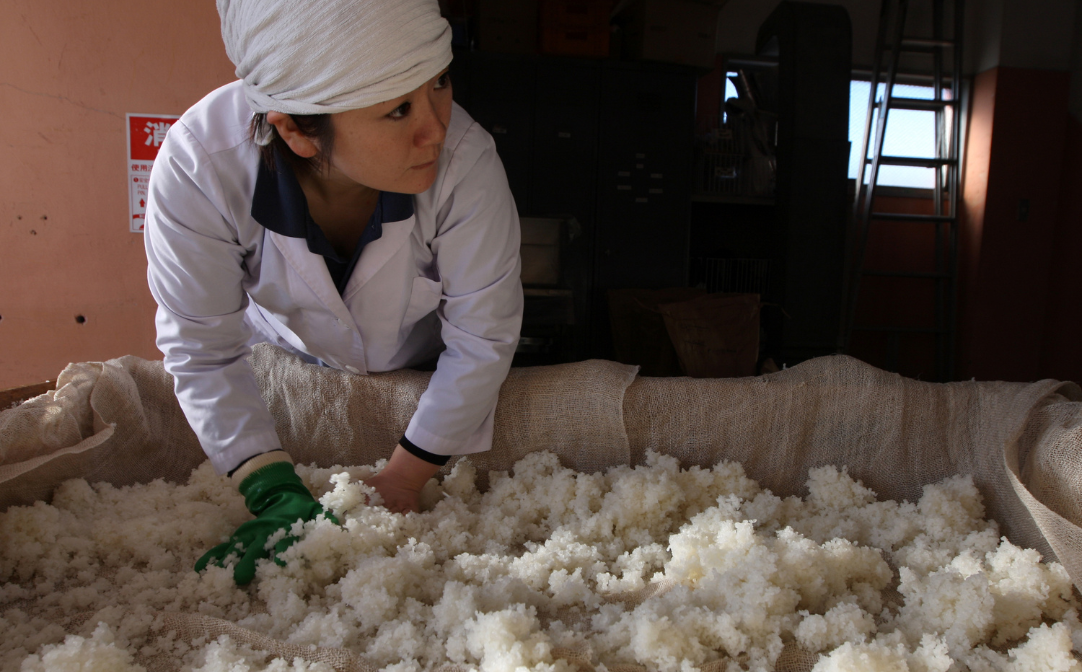
After fermentation, the sake is pressed, pasteurised, filtered, aged and diluted, depending on the style. This entire process is overseen by the master sake brewer, known as the Tōji.
How does sake get its flavour?
Several factors influence the flavour of sake, including the degree of rice polishing, the choice of koji and yeast, fermentation temperatures and post-production processes.
Rice polishing ratio: Sake rice is polished to access the shinpaku, the starchy core of the grain that is broken down by koji. The more highly milled the rice, the purer and more refined the resulting sake tends to be. Junmai daiginjo and daiginjo styles, for example, are often polished to 50% or less. Less polished rice, by contrast, can produce fuller-bodied sakes with more pronounced cereal and earthy notes.
Yeast: As yeast converts sugar into alcohol, it also produces esters and acids. These aromatic compounds shape the character of the sake and contribute to its acidity. Different yeast strains create different expressions. Ginjo sakes, for example, are often associated with aromas of apple, banana or melon.
Koji: Koji plays a central role in saccharification and contributes a subtle sweetness. At the same time, amino acids produced during fermentation add depth and savoury complexity, enhancing the umami and body of the sake.
Fermentation temperature: Fermentation temperature has a significant impact on flavour. Lower temperatures help preserve delicate fruity and floral esters. Higher temperatures, which can be more efficient from a production perspective, tend to produce richer, nuttier and more savoury styles with fuller body.
Water quality: Water composition varies by location and can influence both flavour and texture. Soft water typically produces a more mellow, rounded sake. Harder water can result in a drier, more structured style and can affect mouthfeel.
Filtration, aging and dilution: Filtering affects the clarity, texture and perceived purity of sake. Most premium styles are filtered for a smooth, refined finish, while nigori sakes are left cloudy, giving a creamier and more textured character.
Ageing, known as koshu, can deepen colour and develop more complex flavours, often described as nutty or savoury. Dilution, or kasui, is used to adjust balance and alcohol level, helping to bring the sake into harmony.
The addition of alcohol: Some styles of sake, most notably honjozo, have a small amount of additional alcohol added. This can help create a smoother, more robust and aromatic style.
Sake flavour profiles and styles
Historically, sake has been assessed using the ‘go-mi’, or ‘five tastes’: amami (sweetness), karami (dryness or pungency), sanmi (acidity), nigami (bitterness) and shibumi (astringency).
Umami is also an important consideration when evaluating sake, and these elements vary depending on the style. Umami, a savoury depth often associated with ingredients like mushrooms or soy, is also an important part of how sake is evaluated. The balance of these elements varies depending on the style, shaping the overall character of the sake.
- Daiginjo: 50% polish, fruity, floral, delicate and refined, tropical fruits
- Ginjo: 60% polish, fruity, floral, delicate, notes of melon, apple
- Honjozo: 70% polish, dry, crisp, smooth and balanced due to the added alcohol
- Junmai: 70% polish, umami, earthy, mushroom, full body
Understanding these flavour profiles is key to appreciating sake. It helps you recognise what you are tasting and why it tastes that way. It also guides how sake is best served, from temperature to food pairing, so that its character is enhanced rather than masked.
Kanpai!
Want to learn more about sake? Discover more with a WSET Award in Sake.
About the author:
Erin Niimi Longhurst is a British-Japanese author based in London. Her previous titles include Japonisme (2018), Omoiyari (2020) and The Joy of Wintering (2024). Her current book, Meet Your Matcha, is out now and co-authored with food writer Jassy Davis.
She works as a freelance writer specialising in Japanese culture and lifestyle and is a frequent contributor to Time Out London. Her work has also been featured in publications including Vogue, The Guardian, BBC Travel, Elle, Stylist and more.
