


Long before stainless steel tanks, oak barrels or modern winery technology, wine was being fermented beneath the earth in buried clay vessels. In Georgia, that ancient tradition never disappeared. In this guest article, Georgian winemaker and educator Shalva Khetsuriani explores the story of qvevri, the remarkable vessel that has remained central to Georgian winemaking for thousands of years and still influences how wine is made today.
Every ancient wine civilisation once made wine in clay. Almost all eventually abandoned it, but one never did. That civilisation is Georgia.
For more than eight millennia, wine has been woven into the country's landscape, culture and daily life. Today, more than 500 indigenous grape varieties are known in Georgia, making it one of the richest reservoirs of vine diversity anywhere in the world. Regions including Kakheti, Imereti, Kartli, Guria, Samegrelo, Racha-Lechkhumi and Atchara each preserve their own grape varieties, local traditions and distinctive wine expressions.
Yet one thing connects them all.
Hidden beneath the floors of family wine cellars are large egg-shaped clay vessels known as qvevri. Long before stainless steel tanks, concrete vats or oak barrels became symbols of modern winemaking, Georgians were fermenting, maturing and storing wine in these buried clay vessels. And they never stopped.
The qvevri survived because Georgian families continued making wine as their parents and grandparents had done before them. What is now celebrated internationally as cultural heritage remained, for many families, an ordinary part of rural life.
This continuity is central to Georgia's place in wine history.
In 2017, an international multidisciplinary team of archaeologists, archaeobotanists, chemists, geologists and other specialists published research in the Proceedings of the National Academy of Sciences, presenting the earliest currently known biomolecular evidence of grape wine, dating to around 6000 BC in present-day Georgia. The study, led by Patrick McGovern, Stephen Batiuk and their colleagues, strengthened the scientific evidence supporting Georgia as one of the earliest known centres of winemaking.
Georgia's greatest achievement may not simply be that wine was first made here. It is that one of humanity's oldest winemaking traditions has remained continuously alive ever since. And at the centre of that story stands the qvevri.
What is a qvevri?
A qvevri (also commonly transliterated as kvevri) is a large egg-shaped earthenware vessel used for the fermentation, maturation and storage of wine. Handmade from carefully selected local clay, fired at high temperatures, often coated internally with beeswax and buried almost entirely underground, the qvevri remains one of the very few ancient winemaking vessels still used continuously for its original purpose.
Outside Georgia, qvevri are frequently described as "Georgian amphorae". While understandable, the comparison is technically inaccurate.
An amphora was primarily designed for transporting and storing goods and was usually equipped with handles for movement. A qvevri, by contrast, was never intended to be moved once installed. It forms a permanent part of the cellar itself. Rather than serving as a transport container, it functions as a complete winemaking system in which wine may ferment, mature and, traditionally, remain in storage.
This distinction is far more than a matter of terminology. It reflects two fundamentally different philosophies in the evolution of clay vessels.
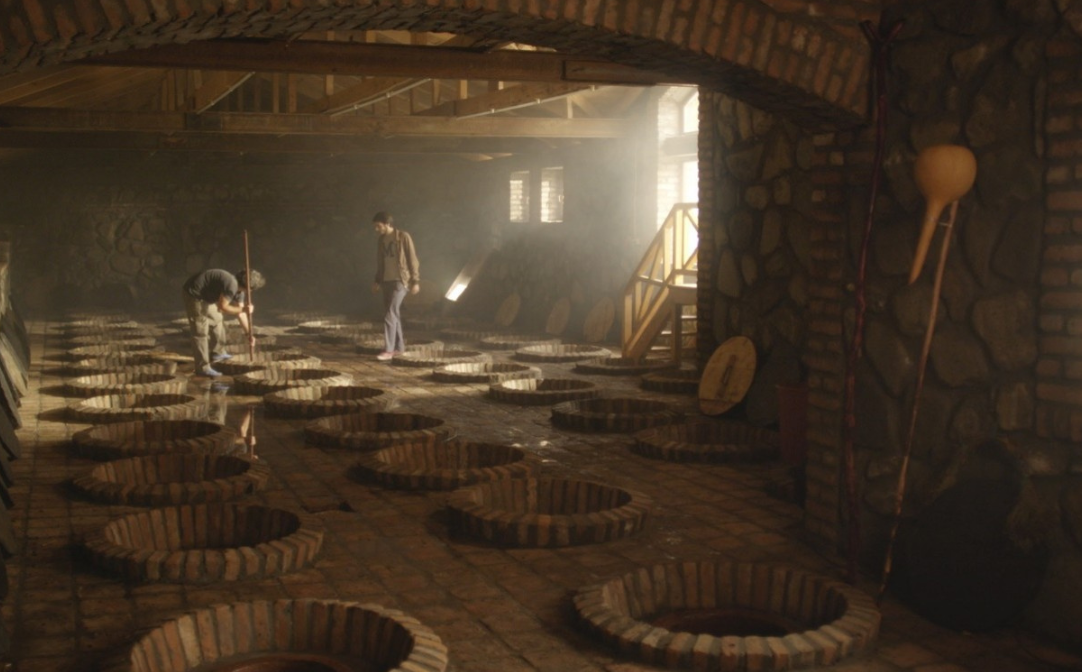
Shuchmann Wines cellar
Wine produced in qvevri may be white, amber, rosé, red or even sparkling. It is usually made with skin contact, though it can also be made without it. Likewise, qvevri wines may be conventional, organic, biodynamic or natural. The vessel itself does not determine the style of wine; rather, it provides the environment within which the winemaker's decisions unfold.
How does a qvevri work?
At first glance, a qvevri appears remarkably simple: a large clay vessel buried beneath the earth.
Its simplicity, however, is deceptive.
Every aspect of its form reflects centuries of observation, experience and practical refinement. Unlike most modern winery equipment, a qvevri performs three essential functions within a single vessel. It serves as a fermenter, a maturation vessel and, traditionally, a storage vessel. Throughout much of the wine's life, there is little need for repeated transfers between containers, reducing handling and unnecessary exposure to oxygen.
The characteristic egg-shaped form is equally purposeful. Its broad central section provides sufficient space for active fermentation. As carbon dioxide is released, grape skins naturally rise to the surface, forming a cap that can be managed by the winemaker.
Towards the bottom, the vessel gradually narrows. As fermentation slows, seeds, skins, yeast lees and other solids settle naturally into the pointed base, leaving progressively clearer wine above. In effect, the qvevri functions as its own natural clarification system with minimal mechanical intervention.
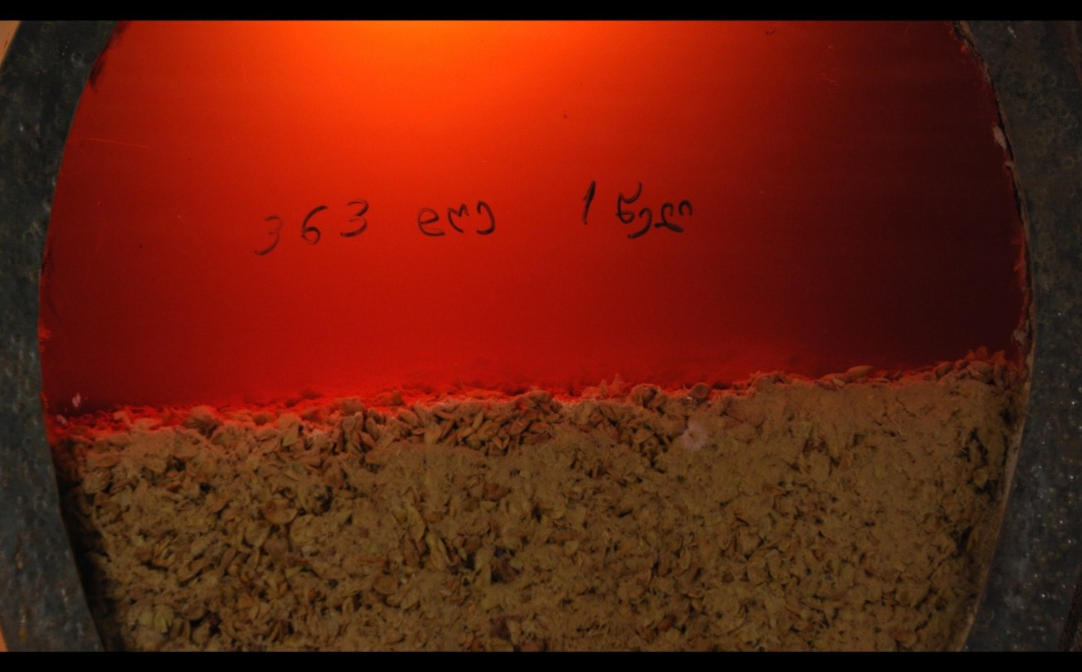
Several researchers have also suggested that the curved internal walls encourage gentle convection currents during fermentation, helping distribute heat and suspended solids more evenly throughout the fermenting must. Although this remains an active area of scientific research, Georgian winemakers refined the vessel's shape centuries before modern fluid dynamics began offering possible explanations.
The decision to bury qvevri underground was a practical one that made sense in a time before modern technology. The surrounding earth acts as a natural thermal buffer, maintaining relatively stable temperatures throughout fermentation and maturation. Long before refrigeration existed, the soil itself provided one of the most effective forms of temperature control available to the winemaker.
Burial also provides structural support. A large qvevri filled with grapes and wine may weigh several tonnes, and the surrounding earth protects the vessel from movement and mechanical stress while creating a stable environment for slow maturation.
Like oak, fired clay permits limited oxygen exchange. Unlike oak, however, it contributes virtually no wood-derived aromas or flavours. As a result, wines made in qvevri tend to express grape variety, vineyard character and vintage with remarkable clarity, their structure deriving principally from the fruit and the winemaker's choices rather than from the vessel itself.
Why did qvevri never disappear?
Every ancient wine civilisation once relied on clay.
From the Mediterranean and the Near East to the Caucasus, clay vessels were the foundation of early winemaking. Over time, however, technological progress led almost every wine culture to replace clay with wood, concrete, stainless steel or other modern materials. Today, only a handful of producers around the world continue to make wine in clay, usually as a conscious revival of an ancient practice.
Georgia followed a different path.
Here, qvevri never became an archaeological curiosity waiting to be rediscovered. It simply remained where it had always been: in everyday use.
The reason is not that Georgians resisted innovation. Throughout history they readily adopted new vineyard practices, presses, pumps, laboratory analysis, temperature control and other technologies whenever these improved wine quality. Yet the qvevri itself was rarely questioned.
For Georgian families, replacing a qvevri with another vessel was never merely a technical decision. A qvevri was often inherited together with the vineyard, the land and the knowledge required to use it. It represented continuity as much as agricultural practice: a living connection between past and future generations.
Many families still preserve qvevri made and buried by their grandparents or great-grandparents, valuing them not only as working vessels but as carriers of family memory. To abandon an ancestral qvevri would have meant more than changing winemaking equipment; it would have meant turning away from a legacy entrusted by those who came before.
This relationship is reflected even in the architecture of traditional Georgian villages. When a new family house was built, the qvevri were often installed first. Only afterwards was the building constructed around them. The underground room containing the buried vessels became the marani - the family wine cellar - while the living quarters rose above it. In this sense, the house was not merely built beside the qvevri; it was built upon it.
The survival of qvevri was also supported by the Georgian Orthodox Church. For centuries, monasteries preserved both viticulture and qvevri winemaking through periods of political instability, foreign invasions and social change. Many monasteries maintained their own marani, ensuring that practical knowledge continued to be transmitted when other cultural traditions were under threat.
Unlike many ancient technologies preserved today behind museum glass, qvevri never ceased to fulfil its original purpose.
This continuity is perhaps unique in the history of wine.
While most wine-producing civilisations preserved fragments of their ancient traditions, Georgia preserved an entire living system. Across almost every wine region of the country, and especially in Kakheti, it remains common to find buried qvevri beneath the floors of ordinary family cellars, still producing wine in essentially the same way as they did 200, 500 or even 1,000 years ago.
Qvevri across Georgia: one vessel, many traditions
There is no single "qvevri method".
Although the vessel itself has remained remarkably consistent throughout Georgia for centuries, the way it is used has always reflected regional traditions, local grape varieties and generations of accumulated experience. The result is not one style of qvevri wine, but a family of closely related winemaking traditions.
Kakheti – the best-known tradition
Eastern Georgia, particularly Kakheti, is the country's largest and most influential wine region and is internationally recognised as the principal home of qvevri winemaking.
After harvest, white grapes are crushed (mostly popular whites Rkatsiteli, Kakhuri Mtsvane and really many other local varieties) - either completely or partially, depending on local practice-and transferred into the qvevri together with their juice. For white wines, fermentation traditionally takes place with the skins, seeds and, in many cases, the stems. After alcoholic fermentation is complete, the wine usually remains in contact with these solids for several additional months before being separated and transferred to another clean qvevri or another vessel for further maturation.
This prolonged skin contact extracts phenolic compounds that contribute structure, texture and tannins while producing the deep golden to amber colours for which many Georgian white wines are internationally recognised today.
Saperavi, Kakheti's most important red grape variety, can also be produced in qvevri.
Imereti – a more delicate interpretation
Travelling west across the country, the same vessel begins to tell a different story.
In Imereti, white wines are traditionally produced from the region's celebrated trio of indigenous varieties - Tsitska, Tsolikouri and Krakhuna. They are generally fermented with a much smaller proportion of skins and seeds than in Kakheti, while stems are usually omitted altogether. As a result, the wines tend to display lighter body, brighter acidity and more restrained tannins, emphasising elegance and freshness rather than structure.
Here, even the name of the vessel often changes.
Instead of qvevri, local winemakers commonly use the word churi. These vessels are frequently smaller than those found in Kakheti. While Kakhetian qvevri often range between 500 and 2,000 litres, and occasionally much larger, many churi hold only 100 to 500 litres, reflecting the scale and traditions of western Georgian family winemaking.
Rather than representing a different philosophy, the Imeretian tradition demonstrates how the same vessel can produce profoundly different wines through changes in regional practice.
While qvevri is today the internationally recognised term, different regions of Georgia have historically used their own names for similar buried earthenware vessels, including churi, qotso, lagvani, kvibari, lakhuti and others. These regional names reflect the extraordinary cultural diversity that has always characterised Georgian winemaking.
A vessel, not a style
These traditions mentioned above remind us that qvevri is a vessel capable of expressing remarkably different regional identities. The diversity of wines it produces mirrors the diversity of Georgia itself.
In 2020, the International Organisation of Vine and Wine (OIV) introduced the official category "white wine with maceration". The OIV defines it as white wine derived from alcoholic fermentation of a must with prolonged contact with grape pomace, including skins, pulp, seeds and potentially stems. The resolution was adopted following Georgia's proposal and specifically acknowledges wines produced using the traditional Georgian qvevri method.
For centuries, however, Georgian growers never described these wines as amber, orange or even skin-contact wines. These are modern international terms.
For Georgian families, they were simply white wines, produced according to local tradition.
Only in recent decades has the international wine community adopted new terminology to describe a style of wine that had existed in Georgia for centuries.
Today, many educators and producers increasingly favour the term amber wine because it describes the wine's appearance without implying a particular vessel or a specific philosophy of production.
Understanding this distinction helps explain why qvevri should never be regarded as a flavour, colour or style of wine.
It’s a vessel in which many different styles of wine, including amber wines, may be produced.
A tradition recognised by the world
For centuries, qvevri remained largely unknown outside Georgia.
Its international revival began only in the late twentieth and early twenty-first centuries, driven by a new generation of small family wineries that returned to traditional qvevri winemaking while simultaneously presenting their wines to the international market. As global interest in authenticity, heritage and low-intervention winemaking grew, so too did curiosity about Georgia's ancient buried clay vessels.
This renewed attention eventually extended far beyond the wine community.
In 2013, UNESCO inscribed the Ancient Georgian traditional Qvevri wine-making method on the Representative List of the Intangible Cultural Heritage of Humanity. The inscription recognised not simply an ancient vessel, but a living body of knowledge encompassing craftsmanship, viticulture, winemaking practices, oral traditions and community life that has been transmitted continuously from generation to generation.
Unlike many forms of cultural heritage that survive primarily through museums or historical reconstruction, qvevri remained alive because people never stopped using it.
Today, qvevri wines are served in Michelin-starred restaurants, studied by wine students around the world and produced not only in Georgia but increasingly in other wine-producing countries. Yet nowhere else does qvevri exist as part of an uninterrupted cultural tradition extending back thousands of years.
Common misconceptions about qvevri
As qvevri has become better known internationally, several misconceptions continue to appear.
- Qvevri is not an amphora. Although both are earthenware vessels, they evolved for different purposes. Amphorae were primarily transport containers; qvevri developed as permanently buried winemaking vessels.
- Qvevri is not a wine style. White, amber, rosé and red wines may all be produced in qvevri.
- Amber wine is not defined by the vessel. It is defined by extended skin contact during fermentation.
- Qvevri does not simply mean natural wine. Wines made in qvevri may be conventional, organic, biodynamic or natural, depending entirely on the producer's philosophy.
Recognising these distinctions allows qvevri to be understood for what it truly is: not a trend, not a category and not a flavour, but a remarkable winemaking technology that has endured across millennia.
More than a vessel
The story of qvevri is often presented as the story of an ancient object, but in reality it is the story of an uninterrupted civilisation of wine. Many of the world’s oldest wine cultures left behind vessels, tools and traditions that now survive largely through archaeology, museums or historical reconstruction. Georgia preserved something rarer: a technology kept alive through use.
Generation after generation, families harvested their vineyards, buried their wine beneath the earth and passed both their qvevri and their knowledge to those who came after them. They did not preserve qvevri because they wished to protect history. They preserved it because, to them, it was never history.
That is what makes qvevri remarkable: not only that it is one of the world’s oldest winemaking vessels, but that it has never stopped making wine.
About the author
Shalva Khetsuriani is the founder and director of the Shalva Khetsuriani Sommelier School, Georgia's only WSET Approved Programme Provider. Shalva is a wine educator and creator of the Georgian Wine Scholar programme. He has dedicated more than two decades to advancing wine education in Georgia, developing the sommelier profession and promoting Georgian wine internationally through education, international partnerships and professional training.
