


Slovakia is not a country many people immediately associate with wine. Yet this small Central European nation has been producing wine for more than 2,000 years and is home to a remarkably diverse and historically significant wine culture.
Inspired by a recent WSET webinar with Lucia Dovalova, this blog explores the history, geography and grape varieties that have shaped Slovak wine, along with the producers helping bring greater international attention to the country today.
A small country with a rich wine heritage
Slovakia’s winemaking history stretches back thousands of years, with evidence suggesting vines were present in the region as early as the sixth or seventh century BC.
During the Roman era, viticulture expanded further, with new grape varieties introduced under the reign of Emperor Marcus Aurelius. Over the centuries, migration, trade and cultural exchange all helped shape the vineyards that exist today.
Like much of Europe, Slovak viticulture has faced periods of disruption. Vineyards were damaged during invasions, later rebuilt and eventually reshaped by phylloxera, which prompted widespread replanting onto American rootstocks.
In 1825, another important chapter began when Johann Evangelist Hubert established sparkling wine production in Bratislava. Inspired by the techniques used in Champagne, Hubert began producing traditional method sparkling wine, laying the foundations for a production style that remains important in Slovakia today.
The twentieth century brought significant change during the communist era, when large-scale production became a priority. This period also saw extensive grape breeding programmes focused on improving disease resistance, frost tolerance and vineyard reliability. Many of the varieties developed during this time still play an important role in Slovak wine today.
Slovakia’s six wine regions
Slovakia officially has six wine regions: Small Carpathian, South Slovak, Nitra, Central Slovak, Eastern Slovak and Tokaj. Despite the country’s relatively small size, these regions display considerable diversity in terms of climate, soil and topography, allowing producers to make a surprisingly broad range of wine styles.
The Small Carpathian region in the country’s west is known for fresh, mineral-driven white wines grown on soils that include granite, sand and gravel. Further south, warmer conditions and fertile soils help produce fuller-bodied wines, both red and white. Nitra’s volcanic influences contribute complexity and structure, while Central Slovakia combines elevation and diverse geology to produce more concentrated, spicy styles. Eastern Slovakia, meanwhile, tends towards lighter, fresher wines.
This diversity is underpinned by an unusually varied geological landscape. Slovakia contains 23 recognised terroirs, with limestone, loess, sand, volcanic rock and clay all appearing across different regions. Together, these conditions help shape the distinct regional identities that increasingly define modern Slovak wine.
Climate and viticulture in Slovakia
Situated between 47 and 49 degrees north, Slovakia sits towards the cooler end of Europe’s wine-growing latitudes, with climatic conditions well suited to producing wines with freshness and balance.
The country experiences four clearly defined seasons, each playing an important role in vineyard development. Cold winters help reduce disease pressure, while warm summers provide enough heat for grapes to ripen fully. At the same time, diurnal temperature variation helps preserve acidity, particularly in aromatic white varieties.
Moderate rainfall and good sunshine exposure further support balanced ripening across the growing season. Together, these conditions allow producers to achieve both fruit concentration and freshness across a wide range of styles.
As a result, Slovakia is capable of producing everything from crisp white wines and elegant reds to traditional method sparkling wines and long-lived sweet wines.
The unique story of Slovak Tokaj
One of Slovakia’s most historically significant wine regions lies in Tokaj.
Many wine drinkers associate Tokaj exclusively with Hungary, but the historic Tokaj region extends beyond modern national borders. Slovakia is home to the westernmost part of this historic region and shares the right to produce Tokaj wines.
Only three principal grape varieties are permitted in Slovak Tokaj: Furmint, Lipovina (known as Hárslevelű in Hungary) and Yellow Muscat.
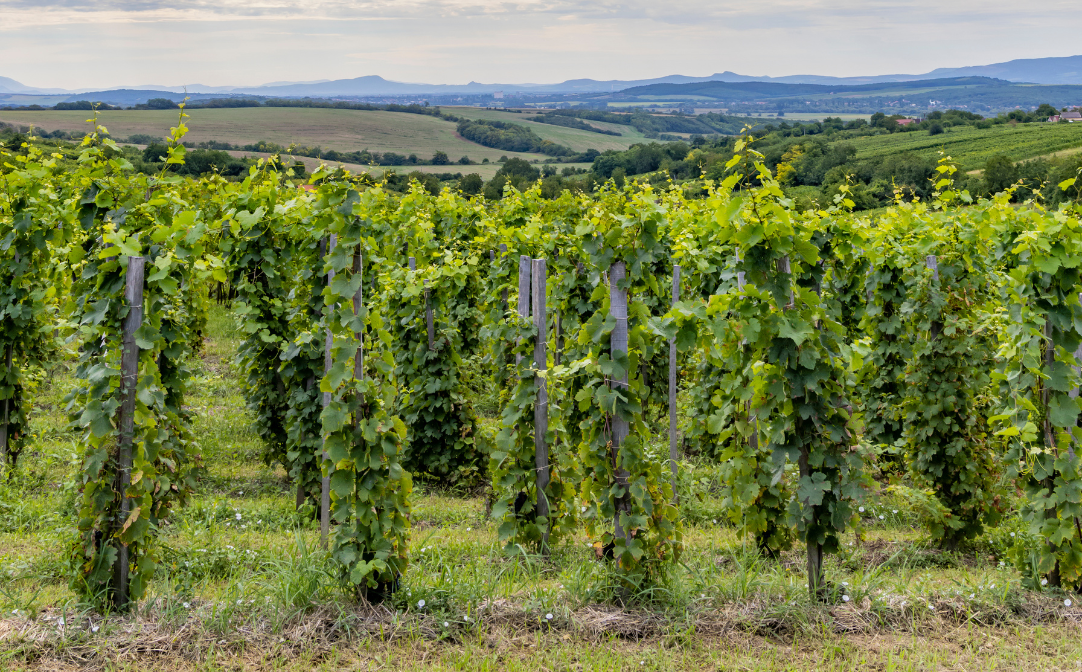
The region’s distinctive character comes from a combination of warm autumn days, misty mornings and volcanic soils. These conditions encourage the development of noble rot, allowing producers to create intensely sweet wines with impressive concentration and complexity. Rich flavours are balanced by vibrant acidity and a pronounced mineral character, preventing the wines from feeling overly heavy.
Beneath the region’s small cellar entrances lies an extensive network of underground tunnels, some stretching hundreds of metres. These historic cellars provide ideal ageing conditions, helping produce wines capable of evolving in bottle for decades.
Traditional grapes meet modern innovation
Slovakia’s vineyards combine long-established varieties with newer grapes developed specifically for local growing conditions.
Traditional white varieties include Welschriesling, Grüner Veltliner and Riesling, while red plantings feature Blaufränkisch, St Laurent and Cabernet Sauvignon. Alongside these familiar grapes is a growing number of varieties developed within Slovakia itself.
Many of these were created through decades of research led by breeder Dorota Pospíšilová, who played a major role in shaping modern Slovak viticulture. Her work resulted in numerous officially approved grape varieties designed to perform reliably in local conditions while producing high-quality fruit.
Among the best-known examples is Devín, a highly aromatic crossing that has become one of Slovakia’s signature modern grapes. Known for its aromatic intensity, it highlights the success of Slovakia’s long-standing grape breeding programmes.
Even the naming of these varieties reflects local identity. White varieties are often named after towns and locations, while red varieties frequently take their names from rivers. Dunaj, named after the Danube, is one such example.
Interest is also growing in PIWI varieties, bred for improved resistance to fungal diseases. By reducing the need for chemical treatments in the vineyard, these varieties offer clear environmental benefits and are attracting growing interest among producers focused on sustainability.
A new generation of Slovak winemakers
Slovak winemakers are becoming increasingly confident in defining what modern Slovak wine looks like.
There is growing emphasis on producing wines that better reflect individual vineyard sites and regional character. Across the country, producers are embracing spontaneous fermentations, lower-intervention approaches and techniques designed to showcase vineyard character rather than cellar influence.
There is also renewed interest in indigenous grapes and locally developed varieties. Organic and biodynamic practices continue to expand, while producers are experimenting with alternative vessels, amphorae and co-fermentations as they continue refining new stylistic approaches.
Historically, most Slovak wine was consumed domestically, but producers are increasingly turning their attention towards international markets. Exports are growing in markets including the UK, Japan, South Korea, China, the Nordic countries, Canada and the United States.
Wine tourism is also developing rapidly, giving visitors greater opportunity to explore vineyards, meet producers and experience the country’s wine culture first-hand.
Increasingly, Slovakia’s future appears to lie with smaller producers focused on quality, sustainability and expressing a clearer sense of regional identity.
Why Slovak wine deserves attention
Despite its long winemaking history, Slovakia remains one of Europe’s lesser-known wine-producing countries, offering plenty for wine professionals and enthusiasts willing to look beyond more familiar regions. Its wine industry combines long-established Central European traditions with diverse geology, locally developed grape varieties and an increasingly modern approach to viticulture and winemaking.
As international recognition grows, Slovak producers are steadily reaching wider audiences and building greater confidence in their identity as a wine-producing nation. For those interested in exploring beyond Europe’s more established wine regions, Slovakia is increasingly becoming a country well worth watching.
