


This article is inspired by a recent WSET webinar on Belgian beer led by beer educator, and founder of Hoppyz, Hélène Alderweireld. In this session Hélène looks at the history of Belgian beer and how beer itself has become an integral part of the wider culture in Belgium.
Watch the full webinar on the WSET Global Events Hub.
Belgium may be small, but its beer culture is vast. Shaped by geography, history, religion and daily life, Belgian beer is as much about how it is brewed, served and shared as it is about what is in the glass.
In this article, we travel through medieval abbeys, farmhouse breweries and classic cafés. These are the places that forged Belgium’s UNESCO-recognised beer culture. It is a culture where glassware, foam and food matter just as much as flavour.
We anchor the story in three defining culture-makers: monastic ales, Saison and Lambic with Gueuze. From there, we step into the present day to look at what Belgians actually drink now, and how modern taprooms sit comfortably alongside centuries-old habits.
This guided tour is inspired by a WSET webinar led by Belgian beer educator Helen Alderweireld.
Why Belgian beer culture is different
Belgian beer is often described as complex, distinctive or iconic. One reason for this is that Belgian beer culture is deeply multicultural.
Belgium sits at the centre of Europe, bordered by France, Germany and the Netherlands. Despite its small size, it contains three distinct regions: Flanders in the north, Wallonia in the south, and Brussels at the centre. Each region has its own language, cultural identity and beer preferences. Even within Belgium, attitudes to brewing, tasting and pairing beer with food can vary noticeably.
Belgium’s location also made it a crossroads for trade, occupation and conflict. Over time, this brought brewing influences from neighbouring countries while repeatedly disrupting local production. Rather than developing a single national style, Belgium absorbed and adapted outside ideas.
Another defining feature is that all three major fermentation approaches are present in Belgium: ale fermentation, lager fermentation and spontaneous fermentation. Very few beer cultures bring all three together in such a small geographical area.
Beer before speciality brewing in Belgium
To understand Belgian beer culture, it helps to look beyond today’s strong and expressive styles.
In the early nineteenth century, Belgian brewing was shaped by excise laws that taxed breweries based on mash tun capacity rather than alcohol strength or ingredients. The mash tun is the vessel where crushed grain is mixed with hot water to release sugars, and because tax was linked to the size of this vessel, brewers worked with smaller mash tuns to keep costs down.
This directly influenced how beer was made. One result was turbid mashing, a traditional method in which parts of the grain mixture are removed and reheated during brewing. This left more complex sugars in the beer, which made it harder for the yeast to break these sugars down and convert this into alcohol. Brewers also used ingredients such as candi sugar, a refined sugar commonly used in Belgian brewing to increase alcohol without adding heaviness or excessive sweetness.
At the time, most Belgian beer was low in alcohol, often around three percent ABV. Brewing was largely seasonal, focused on winter months because refrigeration did not yet exist, and beer stability was inconsistent by modern standards.
Beer was not a luxury product. It was a daily drink, consumed at the table and closely tied to nourishment rather than indulgence.
How imports and Pilsner changed Belgian beer
As drinkers became dissatisfied with inconsistent local beer, they began looking beyond Belgium’s borders. By the late nineteenth century, imports from Germany and the UK were increasingly popular.
German lager beers stood out in particular. They were cleaner, more stable and easier to transport. Lager brewing began to take hold in Belgium, especially around Brussels, where large breweries developed.
After the First World War, enthusiasm for German beer styles understandably declined. However, Pilsner continued to grow. Improvements in refrigeration and yeast management made it reliable and reproducible, and many Belgian breweries eventually shifted almost entirely to Pilsner production.
This period reshaped Belgian beer culture in lasting ways. Many small breweries and local styles began to decline, and beer production became more industrialised with a focus on Pilsner. Even today, Pilsner remains the most widely brewed beer style in Belgium.
Why glassware, foam and service matter in Belgium
Pilsner didn’t just change what was brewed. It changed how beer was presented.
For the first time, beer was bright, golden and clear. This led to a growing focus on glassware, pouring technique, foam and hygiene. The number of different glass shapes increased, and branded glassware featuring the name of the beer or brewery became more common.
In Belgium, foam is considered essential. A head of two to three centimetres is often described as “two fingers” of foam. Beyond aesthetics, foam is traditionally seen as helping protect beer from oxidation and retain aroma.
This attention to service became part of Belgian beer identity. Beer was no longer just a drink. It was something to be presented properly, much like wine.
Belgian beer cafés, food, and UNESCO recognition
There’s no denying that Belgian beer culture has always been social.
Historically, cafés and estaminets functioned as communal living rooms. An estaminet is a traditional neighbourhood beer café, often informal and family-run, where locals gathered after work to drink, talk, play games and spend time together. At a time when homes were small and money limited, these spaces played a central role in daily life.
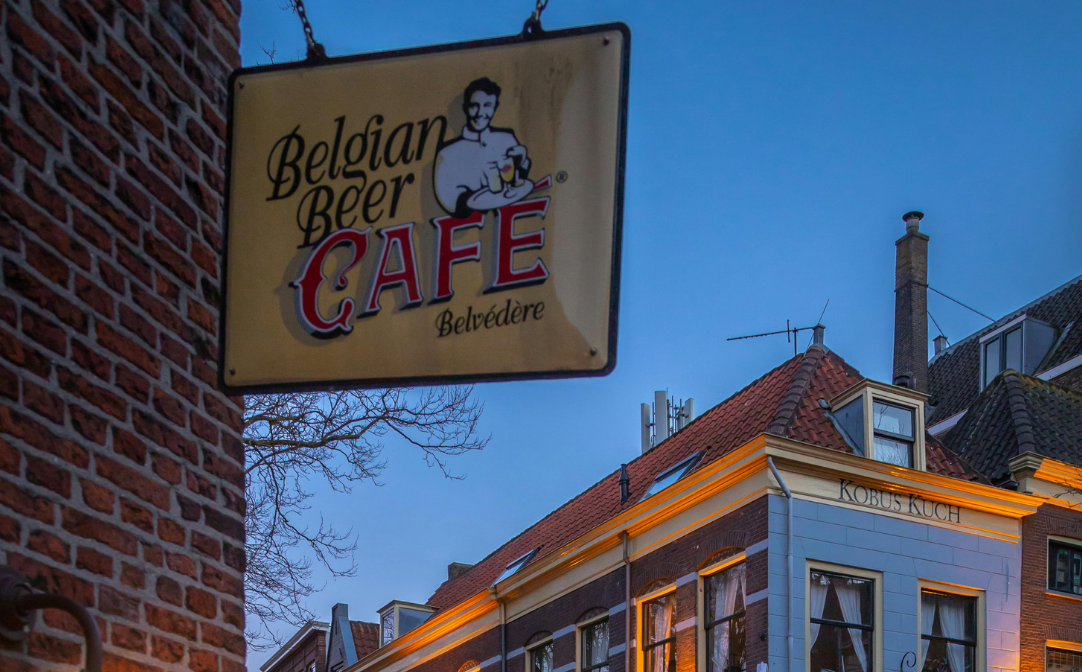
They were also important civic spaces, hosting discussion about politics, religion and social issues. Economically, cafés were important to breweries as key distribution points. In the case of Lambic, cafés even played a role in blending and selection.
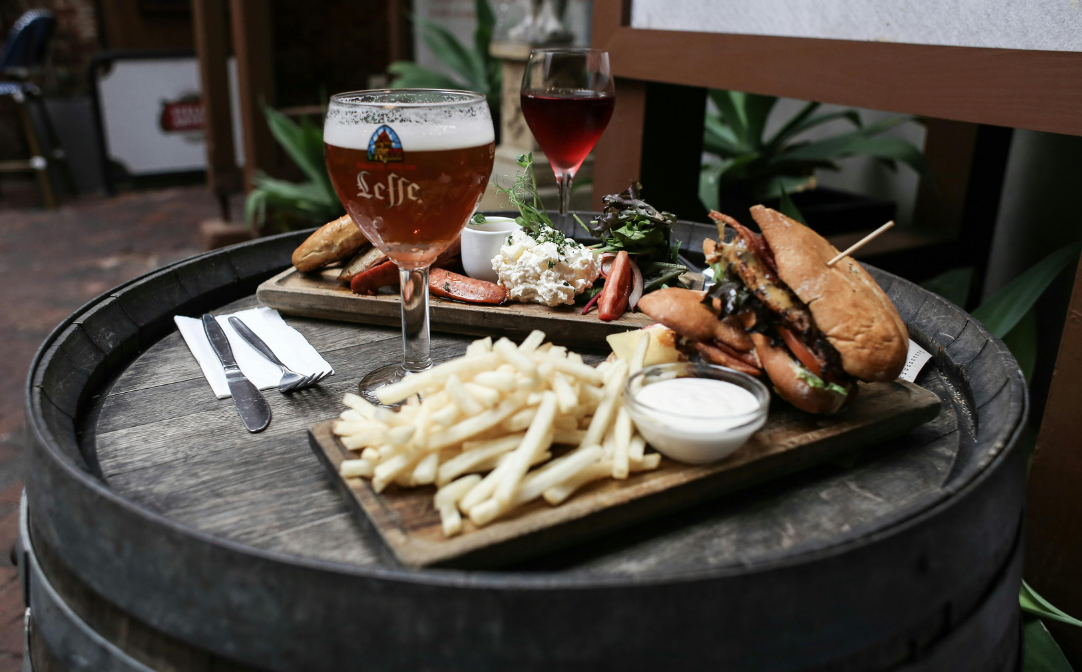
Beer has long been part of Belgian cuisine. Many traditional dishes involve beer directly, while others are paired with beer styles chosen for balance, acidity and aromatic complexity.
This living culture is why Belgian beer culture has been recognised by UNESCO as Intangible Cultural Heritage. It’s not just about preserving a single style, but about recognising beer as being part of everyday life for centuries.
The three beer styles that define Belgian beer
With that cultural foundation in place, we can look more closely at three beer families that have helped shape Belgium’s brewing identity.
Monastic ales and the role of Trappist and Abbey beers
Monastic ales are often perceived as ancient styles, but the beers we recognise today are largely modern creations developed during the twentieth century.
The term monastic ale refers to a family of styles rather than a place of production. It commonly includes beers such as Dubbel and Tripel. This distinction matters because monastery-linked labels do not define style.
Some beers are brewed in connection with a monastery and may be labelled as Abbey beers. Others carry the Trappist logo, which indicates production connected to a Trappist monastery, with monks involved in oversight and decision-making. Importantly, neither designation automatically defines how the beer tastes.
Tripel became one of Belgium’s defining styles. Gold in colour and clear, it is aromatic yet deceptively drinkable, with subtle malt notes reminiscent of light honey or bread crumb and more prominent fruity and spicy aromas from abbey ale yeast, such as citrus, banana, peppercorn or clove. High carbonation and balanced, medium bitterness help offset its high to very high alcohol level, which typically gives a gentle warming sensation.
Saison beer and its farmhouse origins
Saison is a farmhouse ale rooted in agricultural life in Belgium, particularly in the west of the country near the French border.
Traditionally brewed in winter, Saison was made on farms rather than in commercial breweries. Its purpose was practical. It was brewed to refresh seasonal workers who arrived in summer to help with the harvest, at a time when brewing during warmer months was more difficult.
Because recipes relied on whatever cereals, hops and ingredients were available on the farm, Saison varied significantly from year to year. This history helps explain why modern examples of Saison can differ widely in strength, colour and flavour, offering more room for interpretation than many other beer styles.
What unites these diverse expressions is yeast character. Saison yeast is highly expressive, producing fruity aromas such as citrus or pome fruit alongside peppery, phenolic notes, and typically fermenting to a very dry finish with little or no perceptible sweetness. Medium bitterness and high carbonation are common, and some interpretations may show subtle herbal, spicy or earthy notes, reflecting the style’s farmhouse origins.
Lambic and Gueuze and the importance of place and time
Lambic represents one of the most distinctive brewing traditions in the world.
Produced only in and around Brussels and the Pajottenland, Lambic is made using spontaneous fermentation, where fermentation occurs through exposure to naturally occurring microorganisms in the local environment. After boiling, the wort (the sweet liquid extracted from grains before fermentation) is cooled overnight in open vessels known as coolships, allowing a range of microorganisms to inoculate the liquid. Fermentation then proceeds slowly during long maturation in wooden barrels.
This extended barrel ageing takes place in the presence of a complex mix of microorganisms, including lactic acid bacteria, acetic acid bacteria and Brettanomyces, which together shape Lambic’s character over time. Base Lambic is typically uncarbonated, with notable acidity, low to no bitterness, subtle bread-crumb aromas, fruity notes such as apple or lemon, and underlying farmyard-like characters including earth, hay or horse blanket.
Gueuze developed when producers began blending base Lambics matured for different lengths of time and then bottling the beer. By combining both young and aged base Lambics, the blender can create a beer that is more balanced and complex than its individual components. Bottle conditioning allows a secondary fermentation to take place, producing a naturally carbonated beer. Gueuze is typically gold in colour and clear, with high acidity, low or no bitterness, high carbonation, and a dry, refreshing finish. The skill of the blender (the person selecting and combining barrels) remains central to Gueuze production today.
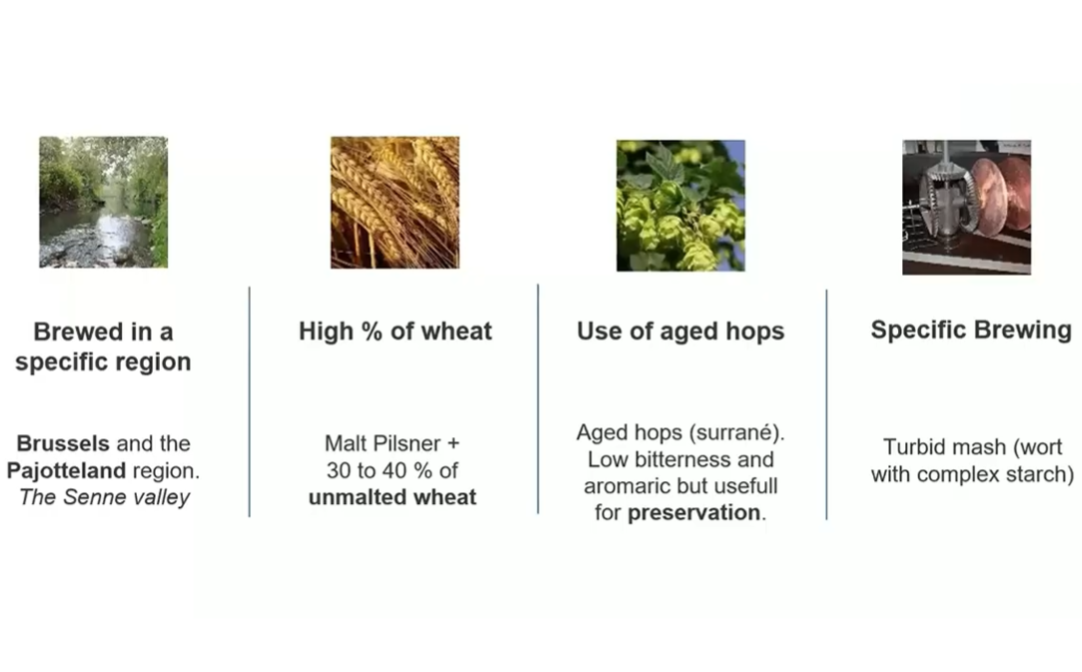
The key components of a Lambic beer
Belgian beer culture today from classic cafés to modern taprooms
Belgian beer culture continues to evolve even now.
Alongside historic breweries and traditional cafés, modern taprooms connected directly to breweries have become increasingly popular. These spaces echo the social role of classic cafés while offering new ways to engage with beer closer to its production.
What remains constant is the cultural mindset and social connection. Beer is something to be shared, discussed, paired with food and served with care.
Belgian beer culture is not defined by a single style or strength. It is defined by continuity, how centuries-old habits coexist with modern brewing, and by the belief that beer is part of daily life rather than a passing trend.
Additional reading
What is a beer sommelier? How to become a beer expert
Classic British beer styles: Stout, pale ale and mild
Ten German beer styles you need to know
